
Marketing today is not just about launching campaigns. It is about building systems that continuously attract interest, guide customers through the buying journey, and provide clear visibility into marketing performance.
When marketing processes are handled manually, teams often experience delayed responses, inconsistent communication, and limited insight into what is actually working. As marketing activity grows, these inefficiencies make it difficult for businesses to scale their efforts.
Marketing automation solves this problem by turning marketing operations into structured workflows. Platforms like Zoho CRM, Zoho marketing automation, and the integrated ecosystem of Zoho One allow businesses to capture interactions, automate communication, and analyze engagement patterns. When these systems are implemented correctly, marketing becomes more predictable and measurable.
If you’re planning to implement or improve your automation strategy, you can book a consultation here: https://calendly.com/anuj-himcos/30min.
Table of contents
What marketing automation workflows should businesses implement?
Businesses that want to scale marketing usually implement five core automation workflows.
- capturing customer interactions within a CRM system such as Zoho CRM
- running automated communication journeys through Zoho Marketing Automation
- identifying highly engaged prospects using AI analysis
- triggering marketing communication based on customer behavior
- tracking campaign performance using real-time analytics
These workflows often operate together within integrated systems like Zoho One.
Quick insights of marketing automation
Marketing automation connects campaigns, customer interactions, and performance analytics into structured workflows.
AI tools help analyze engagement behavior and identify high-intent prospects. Platforms such as Zoho One combine CRM, marketing automation, and analytics into one system that helps businesses manage marketing operations efficiently.
Why many businesses struggle to scale marketing
In many organizations, marketing activities happen across multiple platforms. Customer inquiries may come from websites, campaigns, events, or forms, but the data often lives in separate systems.
When information is fragmented, marketing teams struggle to maintain consistent communication and understand which campaigns generate meaningful engagement. Automation systems solve this challenge by connecting customer interactions, campaigns, and reporting into one operational environment.
1. Centralized customer interaction capture
Marketing interactions happen across websites, landing pages, advertising campaigns, and events. When these interactions are recorded in separate tools, it becomes difficult to understand the complete customer journey.
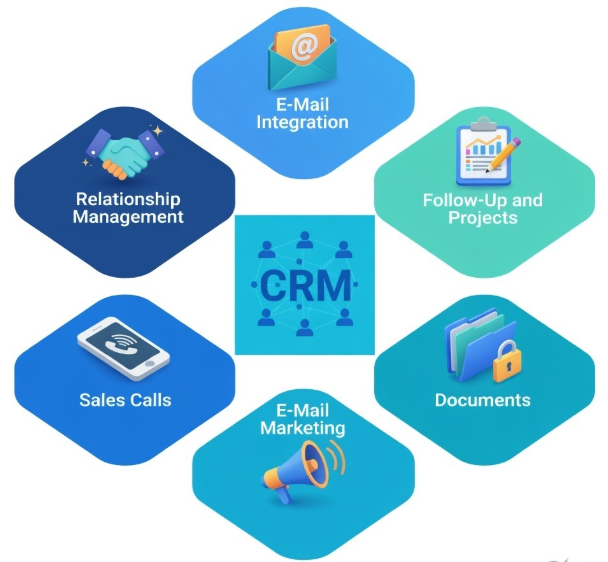
A centralized workflow ensures that every interaction is automatically captured in a CRM system such as Zoho CRM. This creates a unified record of customer engagement and gives marketing teams better visibility into how prospects interact with the business.
Typical elements of this workflow include:
- website and landing page forms connected to CRM
- campaign source tracking
- automatic recording of interactions
- instant confirmation responses
For example, a legal services firm implemented a centralized CRM workflow through Himcos. By automating interaction capture and follow-ups, the organization improved response times and increased conversion rates while saving significant operational time.
2. Automated customer nurturing campaigns
Most prospects need several interactions before they decide to make a purchase. Without a structured communication plan, marketing follow-ups often become inconsistent.
Automated campaign journeys solve this problem by delivering useful information to prospects over time. Using Zoho Marketing Automation, businesses can create communication sequences that guide customers through helpful content and product insights.
These campaigns typically include:
- welcome communication after the first interaction
- educational resources delivered gradually
- insights based on customer interests
- follow-up messages triggered by engagement
This approach helps maintain consistent engagement and gradually builds trust with potential customers.
3. AI-driven engagement analysis
As marketing interactions grow, it becomes important to understand which prospects are showing stronger interest. AI engagement analysis helps marketing teams identify behavioral signals that indicate higher intent. Systems within Zoho CRM analyze activity across campaigns, emails, and websites to identify engagement patterns.
Common engagement signals include:
- email opens and link clicks
- visits to product or service pages
- downloads of reports or guides
- repeated interaction with marketing content
AI tools within the Zoho ecosystem analyze these signals and highlight the prospects who are most actively engaging with marketing content.
4. Behavior-based marketing triggers
Traditional campaigns send the same message to every audience segment. Behavior-based automation improves engagement by responding directly to customer activity. Within the integrated environment of Zoho One, marketing systems can monitor user behavior and trigger communication automatically when specific actions occur.
Examples of behavior-based triggers include:
- visiting product or pricing pages
- interacting with marketing emails
- downloading resources
- registering for webinars or events
These triggers allow businesses to communicate with prospects at the moment they show interest, making marketing messages more relevant and effective.
5. Automated marketing performance reporting
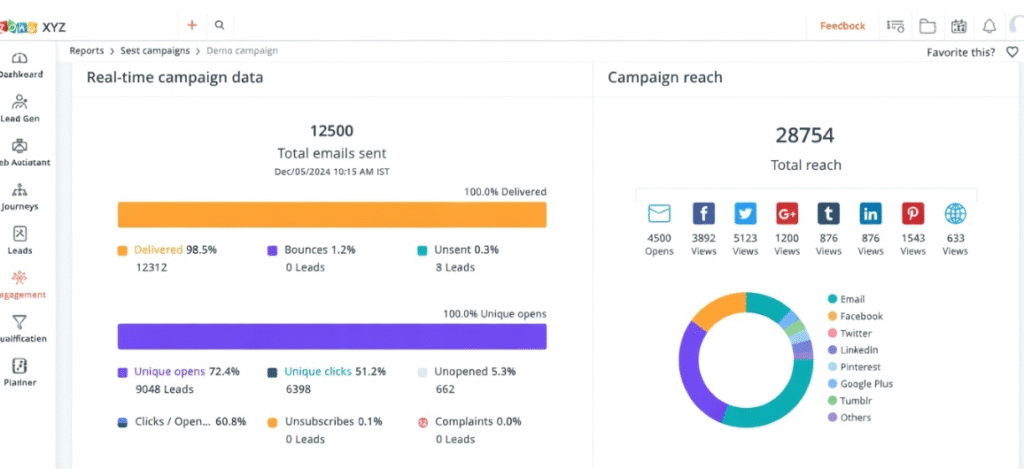
Understanding marketing performance is essential for improving campaigns. However, many teams still rely on manual reporting processes that require gathering data from different platforms. Automation platforms consolidate marketing data into centralized dashboards. Tools like Zoho Analytics allow teams to track campaign performance in real time.
Typical reporting dashboards track:
- campaign engagement trends
- marketing channel performance
- conversion patterns across campaigns
- revenue attribution linked to marketing activity
With automated reporting, marketing teams can evaluate results quickly and continuously improve their strategies.
How Himcos helps businesses build marketing automation systems
Marketing automation works best when CRM systems, campaign platforms, and analytics tools operate as one connected system.
Himcos helps businesses implement structured marketing automation environments using the Zoho ecosystem. Their approach focuses on connecting marketing operations with sales processes and performance reporting.
Their implementations typically involve:
- setting up integrated systems using Zoho One
- connecting CRM, marketing automation, and analytics tools
- designing workflows that match marketing and sales processes
- implementing AI-driven engagement tracking
By building structured automation systems, businesses transform marketing operations into scalable workflows that continuously generate measurable outcomes.
If you want expert guidance on setting this up for your business, book a consultation here: https://calendly.com/anuj-himcos/30min or reach out directly via the contact form: https://himcos.com/contacts-simple/.
Key takeaways
Marketing automation allows businesses to move beyond manual campaign management and build structured systems that manage customer engagement more efficiently.
The most effective marketing automation systems typically include:
- centralized capture of marketing interactions
- automated communication journeys
- AI-driven engagement analysis
- behavior-based marketing triggers
- real-time marketing performance reporting
Platforms such as Zoho CRM and Zoho marketing automation, combined within the ecosystem of Zoho One, enable businesses to implement these workflows within one integrated system.
Organizations that adopt these automation frameworks gain clearer visibility into marketing performance and build marketing operations that can scale with growth.