
Many businesses adopt Zoho One to unify sales, finance, operations, and reporting into a single system. The expectation is clear, complete visibility and structured execution across departments. However, after implementation, gaps begin to appear. Teams continue relying on manual processes, systems remain partially connected, and reporting lacks consistency. The platform is present, but operational clarity is missing.
This challenge is rarely caused by Zoho One itself. It originates from how the system is implemented. Selecting the right partner determines whether Zoho One becomes a structured business system or an underutilized tool. This makes the best practices for selecting a Zoho One partner in India a critical factor in long-term success.
Table of Contents
Quick insights
- Zoho One success depends on system architecture, not tool setup
- Poor partner selection leads to disconnected workflows and low adoption
- Structured implementation aligns sales, finance, and operations
- Integration across Zoho apps eliminates data silos
- Himcos follows an architecture-first implementation model
What is a Zoho One partner?
A Zoho One partner is responsible for designing, implementing, and integrating Zoho One across business functions.
The role goes beyond configuration. It includes defining workflows, structuring system architecture, automating processes, and ensuring that data flows consistently across departments. The effectiveness of Zoho depends directly on how this system is built.
What goes wrong?
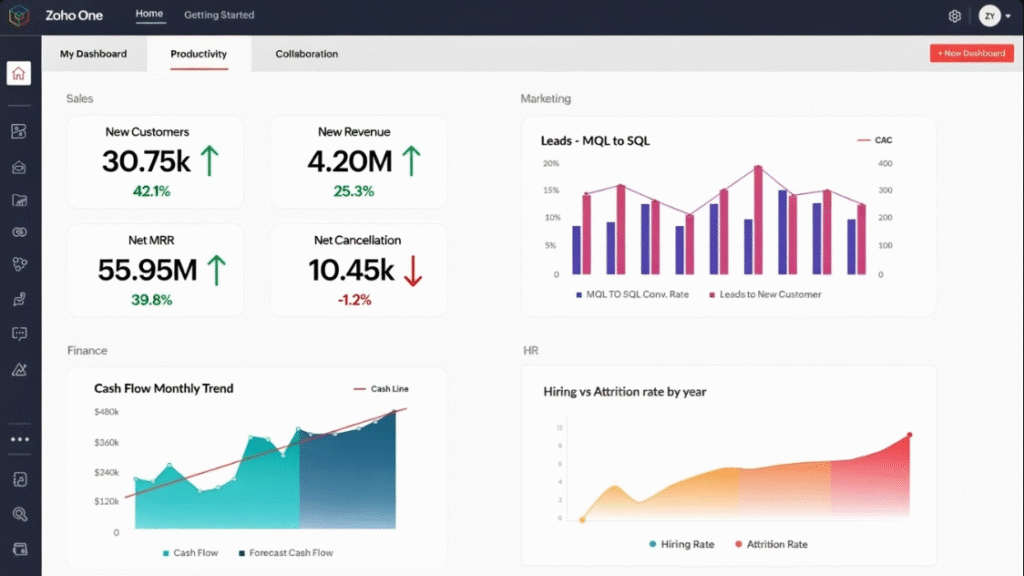
Zoho One implementations fail when systems are configured without aligning to real business workflows. Sales pipelines fail to reflect actual deal movement. Finance operates in isolation from revenue data. Operations rely on manual coordination instead of automated workflows. Reporting becomes unreliable due to inconsistent data flow.
Over time, teams lose confidence in the system and shift back to spreadsheets or disconnected tools. This results in operational inefficiency despite having a powerful platform in place.
Why do implementations fail?
The primary reason behind failure is the absence of structured system design. Many implementations begin directly with tool configuration instead of understanding business processes. Without defining how departments interact, automation becomes fragmented and integrations remain incomplete.
Zoho One is designed to function as an integrated system. Without proper architecture, it behaves like separate applications rather than a unified platform. This is where most failures in the best practices for selecting a Zoho One partner in India originate.
How to choose the right partner?
The solution lies in choosing a partner who approaches Zoho One as a system, not just software.
The 7 best practices for selecting a Zoho One partner in India focus on evaluating how a partner designs workflows, integrates applications, and ensures long-term usability.
A strong partner builds a system that aligns with business operations, ensuring clarity, consistency, and scalability.
7 Best Practices for Selecting a Zoho One Partner in India
1. Start with processes
Effective Zoho implementation begins with understanding how the business actually operates. Sales workflows, approval structures, and operational dependencies must be clearly mapped before any configuration begins.
When this step is skipped, systems become generic and fail to support real execution. When done correctly, Zoho One reflects how the business runs instead of forcing teams into rigid structures.
2. Value experience over certification
Certifications indicate platform familiarity, but they do not guarantee execution capability.
Experienced partners understand operational bottlenecks, data inconsistencies, and workflow gaps. They design systems that function under real conditions, reducing implementation risk and ensuring smoother deployment.
3. Ensure full ownership
Zoho One implementation extends beyond initial setup. It includes testing, refinement, and long-term system stability.
A reliable partner remains involved from system design to post-launch optimization. This ensures that workflows function correctly and the system performs consistently under real usage. Without this ownership, businesses are left managing incomplete systems.
4. Focus on integration
The real strength of Zoho One lies in its ecosystem. A capable partner ensures that sales, finance, and operations are connected through seamless data flow. Reporting is built on unified data instead of fragmented inputs.
This eliminates silos and enables accurate decision-making across departments.

5. Keep systems simple
Over-engineered systems create long-term inefficiencies. Excessive customization, complex workflows, and heavy coding make systems difficult to manage and scale. Even small changes become resource-intensive over time.
Strong partners focus on simplicity, using native Zoho capabilities wherever possible. This ensures stability, flexibility, and ease of maintenance.
6. Prioritize adoption
System success depends on consistent usage. Interfaces should align with user roles, workflows should guide execution clearly, and training should reflect real job functions. When usability is prioritized, teams adopt the system naturally.
Without this, even well-designed systems fail in daily operations.
7. Follow a structured approach
Successful Zoho implementations follow a defined sequence. The process begins with workflow discovery, followed by system architecture design. Configuration aligns with this structure, ensuring proper automation and integration. Data migration, testing, and validation ensure system reliability before deployment.
Post-launch support ensures continuous improvement as business needs evolve. This structured approach ensures long-term success and reduces implementation risk.
Implementation steps
A structured Zoho implementation follows a phased approach. It begins with detailed workflow analysis across departments. This is followed by system architecture planning, ensuring that integrations and data flows are clearly defined. Configuration is then aligned with this design.
Data migration and testing validate system accuracy before launch. After deployment, continuous optimization ensures that the system adapts to changing business needs without disruption.
System architecture
A strong Zoho system is built on three layers. The first layer focuses on process design, where workflows across departments are clearly defined. The second layer structures Zoho applications based on these workflows. The third layer ensures integration, allowing seamless data flow across all business functions.
This architecture transforms Zoho One into a unified operational system rather than disconnected tools.
How does Himcos implement Zoho One differently?
Himcos follows an architecture-first approach to Zoho One implementation. In healthcare organizations, systems are designed to manage patient workflows from initial contact to billing. Each step follows a defined structure, reducing manual intervention and improving data accuracy.
In automotive businesses, Zoho One is structured to manage lead tracking, automate follow-ups, and connect sales with inventory systems. This improves visibility and ensures consistent execution across the sales lifecycle.These implementations demonstrate how structured system design leads to measurable operational improvements.
Key takeaways
Selecting the right partner determines whether Zoho One delivers value or creates complexity. A structured approach ensures alignment between processes, automation, and data flow. Integration improves visibility, while simplicity ensures long-term usability.
The best practices for selecting a Zoho One partner in India directly impact how effectively the system supports business growth.
Looking to implement Zoho One?
For businesses aiming to build a structured operational system using Zoho One, partner selection becomes a strategic decision.
Himcos designs and implements Zoho One systems aligned with business processes, ensuring clarity, scalability, and consistent execution.
A well-structured implementation ensures that Zoho One actively supports business performance instead of remaining just a software investment.