
Sales forecasting in Zoho CRM depends on patterns formed through consistent deal activity. Systems analyze stage movement, deal velocity, probability shifts, and value changes to estimate future revenue.
However, when CRM data does not reflect real sales behavior, forecasts begin to drift. Numbers still appear accurate, but outcomes no longer match projections. At this stage, reviewing data structure and behavior tracking becomes necessary before adjusting forecast models.
If you’re already seeing this gap, you can book a quick review here: https://calendly.com/anuj-himcos/30min or reach out directly through the contact form: https://himcos.com/contacts-simple/.
Table of Contents
Key insights on CRM data and forecasting
- Forecasting depends on behavioral data, not static entries
- Inconsistent data structure weakens pattern recognition
- Incomplete records create false confidence in projections
- Manual adjustments hide underlying data problems
- Structured data design improves long-term forecast accuracy
What causes forecasting failure in Zoho CRM?
Forecasting fails when CRM data does not represent actual sales activity. Systems rely on historical behavior patterns, and even small inconsistencies distort projections over time.
Issues such as outdated deal stages, inflated probabilities, or missing updates gradually weaken forecast accuracy. These problems build silently and are often detected only after revenue targets are missed. A data-level evaluation is required when forecasts consistently diverge from actual outcomes.
Why forecasting depends on behavioral data, not static records
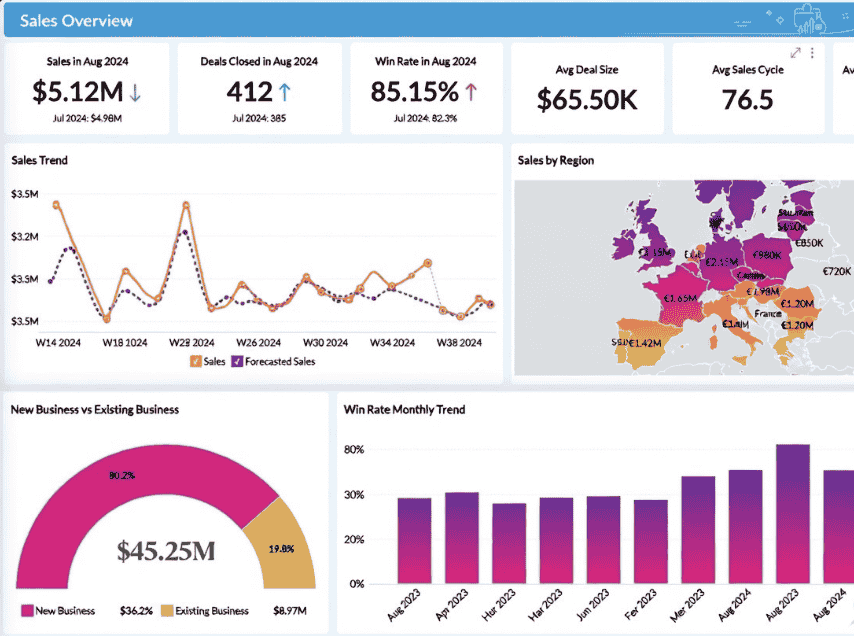
Forecasting models in Zoho CRM interpret how deals move, not just where they are. Stage duration, progression patterns, and activity frequency define predictive accuracy. When deals remain unchanged despite stalled progress, the system interprets inactivity as normal flow. Over time, this creates misleading patterns that affect future forecasts.
Correcting forecasting accuracy requires aligning CRM updates with real-world sales behavior rather than static stage positioning.
How inconsistent data structure distorts forecast models
Forecasting requires uniform definitions across all records. When deal stages, values, or timelines are interpreted differently across teams, data loses consistency. This inconsistency causes forecasting models to treat different scenarios as identical. As a result, conversion rates and revenue projections fluctuate without clear reasons.
Standardizing data definitions across teams improves pattern recognition and stabilizes forecast outputs.
How incomplete CRM data creates false confidence
Incomplete records often continue to influence forecasts despite missing critical context. Deals without proper qualification, stakeholder mapping, or realistic timelines still contribute to projected revenue.
This creates an inflated pipeline that appears strong but lacks real conversion potential. Forecasts begin to show confidence that is not supported by actual deal readiness. When projections repeatedly miss targets, reviewing data completeness becomes necessary before adjusting forecasting logic.
Why manual forecast adjustments hide the real problem
When forecasts lose accuracy, manual adjustments are often introduced through spreadsheets or executive overrides. These changes improve short-term accuracy but do not correct underlying data issues.
Over time, reliance on manual intervention reduces trust in CRM outputs. Forecasting shifts from data-driven analysis to subjective estimation. Sustainable improvement requires fixing data inputs rather than adjusting forecast outputs.
How structured data fixes forecasting in Zoho CRM
Forecast accuracy improves when CRM data reflects actual sales behavior. Instead of modifying reports or probabilities, the focus shifts to how data is captured, updated, and validated.
Structured data design aligns CRM inputs with real-world activity. This allows forecasting models to learn from accurate patterns and produce reliable projections over time. Organizations experiencing repeated forecast variance benefit from restructuring data logic rather than refining dashboards.
Himcos approach to fixing forecasting at the data level
Himcos addresses forecasting issues by rebuilding CRM data architecture. The focus remains on how information flows, evolves, and reflects actual sales decisions.
Instead of adjusting forecast outputs, Zoho CRM is restructured to capture accurate behavioral signals. This improves predictive reliability without requiring manual intervention. This approach is typically applied when forecasts consistently fail despite active CRM usage.
Rebuilding deal stages around decision logic
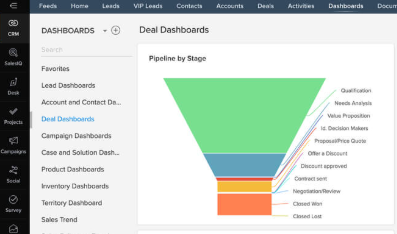
Deal stages are defined based on actual decision milestones rather than generic labels. Each stage represents a measurable shift such as qualification, stakeholder alignment, or commercial agreement.
This ensures that progression reflects real movement, not assumptions. As a result, forecasting models learn from verified behavior instead of inflated stage transitions. Aligning stages with decision logic improves consistency across all opportunities.
Standardizing forecast-relevant data fields
Key fields such as deal value, expected close date, and probability are standardized across the organization. Rules are applied to control how and when these values can be updated.
This reduces variability in data interpretation and prevents unrealistic projections. Forecasting becomes more stable when historical data follows consistent patterns. Standardization allows models to compare similar opportunities accurately over time.
Enforcing data completion at the right stage
Data requirements increase as deals progress through the pipeline. Early stages require minimal input, while later stages demand detailed validation.
This ensures that only qualified opportunities influence advanced forecasts. Incomplete or unverified deals are prevented from distorting projections. Gradual enforcement improves both data quality and forecast reliability.
How Himcos aligns Zoho CRM with Zoho One for forecast accuracy
When Zoho CRM operates within the broader Zoho One ecosystem, forecasting gains additional context.
Data from finance, support, and customer interactions enriches CRM insights. This allows forecasts to reflect not just deal stages but overall business conditions. Integrating systems improves accuracy by connecting revenue signals with operational activity.
Connecting revenue signals to CRM pipelines
Financial data such as invoices, payments, and revenue recognition is linked to CRM pipelines. This allows forecasts to align with actual income patterns.
When pipeline value reflects real financial outcomes, forecast deviations reduce. Planning becomes more reliable because projections are grounded in verified data. Organizations with recurring forecast gaps benefit from connecting CRM with finance systems.
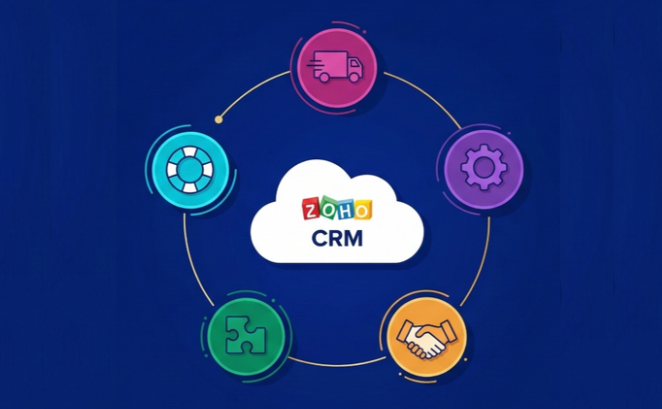
Establishing CRM as the forecasting reference system
Forecast reliability increases when CRM becomes the single source of truth. Disconnected tools and manual updates reduce consistency and delay insights.
A unified system ensures that all data flows through one structured environment. This improves trust in forecasts and reduces dependency on external adjustments. When CRM reflects complete business activity, it becomes a reliable forecasting engine.
Why governance determines long-term forecast stability
As organizations grow, maintaining data consistency becomes more complex. Without governance, variations in data entry and process execution reduce forecast accuracy.
Governance frameworks define ownership, validation rules, and periodic reviews. These controls maintain consistency as data volume increases. Long-term forecasting stability depends on structured oversight rather than individual discipline.
When should CRM data be rebuilt for forecasting?
Rebuilding becomes necessary when forecasts consistently fail despite active CRM usage. This indicates structural issues in data capture and interpretation.
Common signals include repeated forecast misses, inflated pipelines, and heavy reliance on manual adjustments. These patterns reflect underlying data misalignment. Addressing these issues at the data level improves forecasting outcomes significantly.
Key takeaways
- Forecasting accuracy depends on data quality, not tools.
- Behavioral data drives reliable predictions.
- Inconsistent structure weakens forecast models.
- Manual adjustments hide root causes.
- Structured data design improves long-term forecasting.
Book a Free consultation
For businesses using Zoho CRM, improving forecasting accuracy requires evaluating data structure and behavior tracking.
This includes identifying inconsistencies, restructuring data architecture, and aligning CRM with actual sales processes. A consultation provides clarity on forecast gaps and the steps required to correct them.
Book here: https://calendly.com/anuj-himcos/30min
Or contact the team directly: https://himcos.com/contacts-simple/