
Financial decision-making has transitioned from a periodic process to a continuous process of evaluation. Organizations today use real-time financial data instead of static reports to make informed decisions about spending, forecasting, and risk management. In the Zoho Books system, Zia AI is at the forefront of this transition, as it is responsible for interpreting accounting information to provide contextual insights that inform financial decision-making.
As organizations continue to produce increasing amounts of transactional data, the interpretation of this data becomes as important as its accuracy. Zia AI helps to overcome this problem by pointing out patterns, anomalies, and trends in the data without leaving the Zoho system. In this context, service partners like Himcos help organizations integrate AI-powered financial intelligence with their operational priorities and planning frameworks.
For businesses looking to implement this effectively, you can book a consultation here: https://calendly.com/anuj-himcos/30min
Table of Contents
Zia AI as an embedded financial intelligence layer
Within Zoho Books, Zia AI operates by watching finances in real time – moving beyond backward-looking reviews. Invoices, costs, incoming funds, and shifts in cash are constantly analyzed. Because of this steady intake, raw data becomes meaningful indicators. Finance groups gain insight while events unfold, not after closing reports. Periodic snapshots become less central when updates arrive as developments occur.
Within Zoho’s book, Zia operates near where data lives. Insights emerge inside the accounting environment itself, removing the need for outside analytics platforms. Because decisions making turns faster when information is nearby, financial details show up exactly where they are needed. By adjusting dashboard layouts and process flows, Himcos ensures those outputs fit how teams approve, review, and report. Timing matters – insights arrive aligned with existing operational rhythms.
Improving cash flow awareness and forecasting
One measure stands out when checking a company’s financial state: flow of money. Through constant tracking of funds arriving and leaving, Zia sharpens understanding of these flows. Patterns emerge that might influence available resources later. Rather than fixed forecasts, finance groups now observe shifts in how payments occur and where costs accumulate. What changes is not just data access but how timing reveals new clarity.
Beginning with past records, Zoho book uses ongoing review to shape forecasts. Through Zia AI, patterns emerge when earlier data meets present actions, revealing what may come next. Instead of waiting, businesses see cash gaps early, handle funds wisely, one moment at a time. Decisions shift from less guesswork, to more response to how money actually moves. What results is planning that acts before events arrive, built on real traces, not imagined ones.
Expense analysis and spending control
As companies expand, tracking expenses tends to lose consistency. With insight into how funds move through departments, suppliers, and months, clarity begins to form. When unusual transactions appear, intervention follows naturally due to pattern recognition. Oversight strengthens, yet human monitoring stays minimal because systems adapt silently.
Insight into expenses shows up where it matters inside Zoho books, helping finance groups review purchases along with related documentation. With clear sight of transactions, responsibility stays strong without limiting daily operations. Setup of cost categories and authorization paths is guided by Himcos, aligning Zia outputs with control over outflows and financial planning.
Need help structuring expense workflows? Reach out here: https://himcos.com/contacts-simple/
Risk identification through anomaly detection
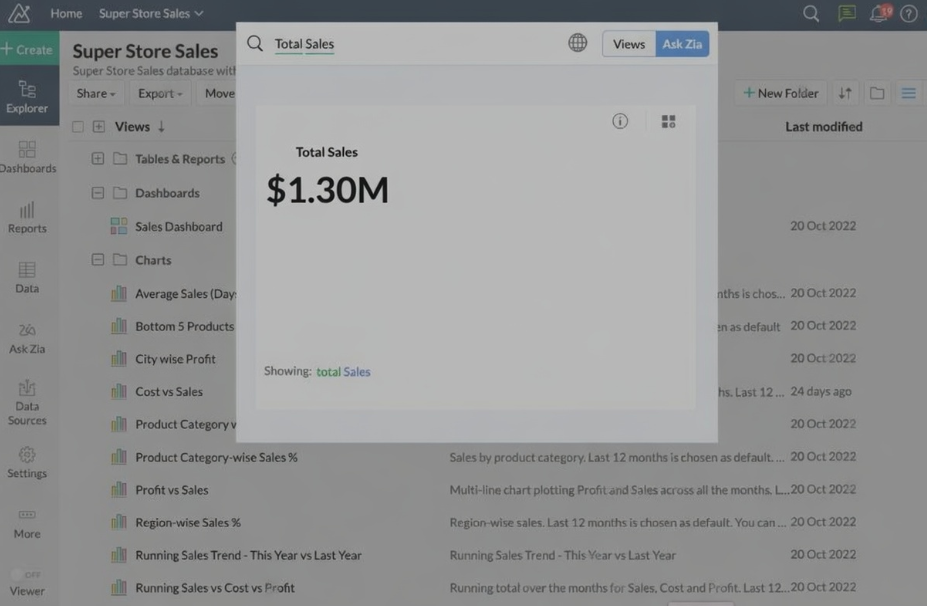
Risk in finance typically appears via small mismatches, not clear mistakes. Because patterns shift, Zia detects differences across payments, transaction flows, and account records. When behaviors drift from norms, early warnings arise, examples include repeated charges, atypical supplier actions, or shifts in payout schedules.
Within Zoho Books, anomaly detection is embedded through Zia AI, enabling finance groups to examine issues absent external audits. Although risks are flagged promptly, background details stay preserved. Oversight continues steadily instead of occurring in intervals, reinforcing internal financial safeguards progressively.
Detecting irregular transactions in real time
During regular bookkeeping tasks, unusual transactions emerge immediately when compared to past trends through Zia AI. Rather than waiting until statements are reconciled, alerts arise while data is being entered. As discrepancies surface, finance staff examine them together with original documents for clarity. With immediate insight into variances, mistakes have less chance to accumulate across reports. Oversight becomes more consistent inside Zoho’s books due to continuous behavioral analysis by the system.
Supporting internal controls without manual burden
Routine inspections within internal controls frequently burden accounting personnel. Yet subtle shifts in patterns gain attention through constant monitoring by Zia AI. Exceptions emerge more clearly when automated observation replaces periodic reviews. Oversight remains strong even as reliance on hand-picked samples fades gradually. Structured processes stay intact for Zoho books operators, despite fewer added tasks. Attention moves naturally toward interpretation instead of routine verification.
Enhancing financial reporting and interpretation
Only clear understanding gives worth to financial reports. Through interpretive layers applied to routine statements, Zia AI enhances clarity. Within Zoho books, shifts in trends and variations stand out more plainly because of added insight. Stakeholders grasp key changes sooner due to improved visibility into movement patterns.
Instead of substituting human judgment, Zia AI highlights aspects needing closer inspection. Because patterns emerge more clearly, finance leaders shape conversations around emerging data. Forecast adjustments follow naturally when trends gain sharper definition. Strategic choices benefit whenever analysis ties directly to operational goals. As alignment improves between reports and leadership focus, clarity in decisions grows stronger. Himcos ensures systems reflect what matters most to executives overseeing performance. When interpretation becomes context-aware, outcomes tend to improve without added effort.
Decision support for growing organizations
With growth, companies face more frequent financial choices, often intricate. Because of Zia AI, analysis stays uniform despite larger data flows. Even when transactions multiply, clarity persists through organized insight delivery. Information does not overwhelm due to consistent structuring methods applied continuously.
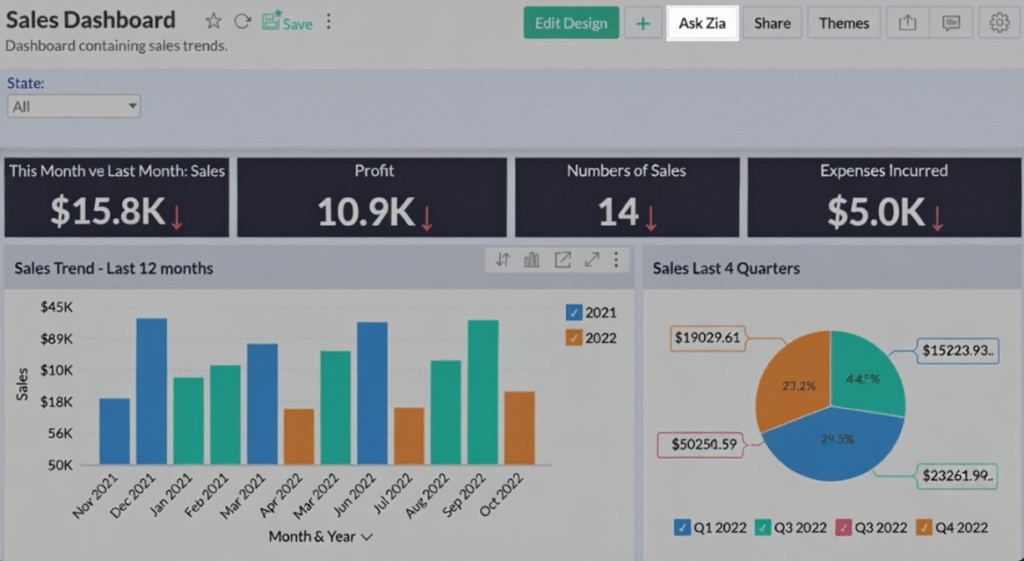
In Zoho books, decisions are made constantly, not just occasionally. Because insights appear promptly, finance groups adjust prices, deadlines for payments, and when to invest. Stable progress follows – decisions rely on live financial patterns instead of old reports. What emerges is a rhythm where actions align closely with real-time data flow.
Governance, accuracy, and data discipline
Dependence on clean data defines what AI insights can deliver. Within Zoho books, Zia AI functions strictly through organized accounting frameworks, relying exclusively on formatted financial entries instead of uncertain sources. Accuracy emerges naturally when every value traces back to its origin. Structure becomes the silent guard of reliability.
This approach strengthens governance models. Due to traceable insights, financial choices stay open to review. Trust in AI-driven results persists when responsibility is preserved. With structured data alignment, Himcos enables clarity for Zia AI’s operation on reliable fiscal inputs.
Maintaining traceability in AI-supported decisions
From every observation made by Zia, a path leads directly to documented transactions in Zoho books. Because of this connection, financial staff can confirm findings while justifying results at review time. With clarity built into choices, confidence grows among leadership and oversight roles.
Balancing automation with financial oversight
Despite automated functions, human insight stays central within Zia AI’s framework. Oversight continues through finance experts who assess flagged items before responding. Attention points emerge via machine input, yet decisions rest firmly with personnel. Fatigue diminishes under this arrangement, even as accountability remains unchanged. Governance adapts gradually, shaped by both algorithmic assistance and expert review.
Integration with broader financial operations
Within a broader financial framework, Zoho’s books function alongside integrated tools. When connected to billing, tax handling, and regulatory processes, Zia delivers deeper clarity. Such integration enables monetary data to shape choices across business activities, not just recordkeeping.
Through integration of Zoho Books with related platforms, Himcos enables organizational support. With alignment between Zia AI outputs and overall financial workflows established, insight becomes embedded. Rather than appearing as a standalone function, artificial intelligence forms part of routine oversight. Such methods allow analytical processes to operate within daily practices naturally.
Enabling structured financial intelligence with Himcos
When financial setups follow clear rules, Zia AI in Zoho Books begins revealing useful patterns. Forecasts hit closer to reality whenever data flows through well-ordered channels, with consistent account logic and verified control steps. Under supervision, Himcos reshapes how Zoho Books functions by shaping account categories, tracing money movement, setting up review sequences, matching reports to leadership needs. With order built into the foundation, insights from Zia appear where choices are made, not buried in logs.
From setup onward, Himcos links billing, inventory, CRM, payroll, and compliance into one cohesive flow, allowing financial insight to move seamlessly through interconnected systems. With oversight built in, live dashboards offer situational clarity while records remain auditable, ensuring automated actions stay aligned with responsibility. Gradually, this coherence allows Zia AI to act as a steady source of fiscal awareness woven into routine tasks, guiding expansion, adherence to rules, and future planning within a consistent management framework.
If you’re planning to implement or optimize Zoho Books with AI-driven insights, schedule a consultation here: https://calendly.com/anuj-himcos/30min
Or get in touch directly with the team: https://himcos.com/contacts-simple/