
Marketing operations within small and medium-sized businesses now operate under conditions of scale, accountability, and sustained engagement. Growth does not stem from one-off promotions or occasional messages. It arises through steady interaction via email, online sites, incoming queries, and web-based tools shaping customer choices over time. Handling such touchpoints without automation creates operational strain. This strain grows harder to overlook when a company moves beyond its early stages.
Thus, marketing automation now stands as an essential part of daily operations. Through a single platform, workflows gain structure, processes link smoothly, interactions follow clear rules, and information flows openly. Systems like Zoho marketing automation help companies handle intricate tasks while keeping effort under control. With guidance from partners like Himcos, the technology grows steadily alongside business needs instead of operating in isolated fragments.
Table of Contents
Shifting market dynamics and SMB expectations
Shifts in customer actions continue to pressure marketing frameworks over time. Research by purchasers happens separately from seller influence, unfolding through online exploration of options. Connections with companies occur across various platforms, strung out across days or even longer phases. Decisions emerge slowly, demanding consistent presence instead of isolated messages.
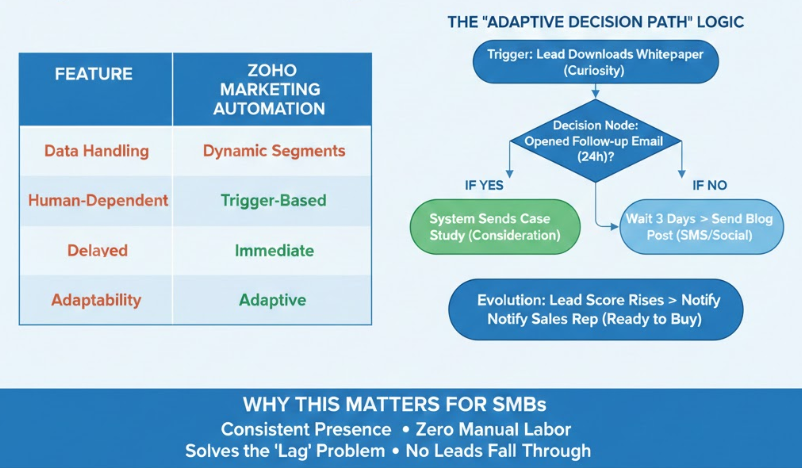
When tasks are handled manually, keeping up with demands grows difficult. Because follow-up relies on personal initiative, results often lack consistency. Outdated segments emerge rapidly, since static grouping cannot keep pace with shifting interests. Engagement tends to lag, responding only after actions occur instead of anticipating them. Zoho marketing automation shifts this dynamic, activating responses the moment user activity is detected. As individuals progress from curiosity to consideration, interaction patterns adjust without human intervention. This responsiveness comes from embedded decision paths that evolve alongside changing buyer signals.
Structural constraints of manual marketing models
When growth occurs, weaknesses in hands-on processes grow more obvious. With higher numbers of leads, slower replies happen more often. Separate campaign management results in mismatched communication, affecting how the brand is seen. Insights are usually based on incomplete information, which reduces clarity in assessing outcomes.
Structured execution takes the place of repetitive tasks through automation. Instead of irregular methods, campaign scheduling, lead follow-ups, and performance monitoring function inside established frameworks. With Zoho marketing automation, consistent outcomes are possible without losing room for tailored adjustments. Actual business operations guide workflow design when configured strategically by Himcos, moving beyond one-size-fits-all models.
Marketing automation as an operational backbone
When companies grow, their operations often face complexity, and marketing automation systems serve as a structure. Expansion, whether through team scaling or product launches, introduces complexity; stability follows when workflows are consistent. Decisions gain clarity where data flows reliably. Entering unfamiliar markets tests a company’s adaptability, and and predictable processes reduce uncertainty. As demands increase, having a steady foundation matters more than speed.
Zoho’s marketing automation operates via a networked structure, linking promotional efforts directly to customer records and data analysis tools. Because of these links, teams see clearer paths from effort to financial result. With focus on strategic goals, Himcos shapes how the system serves company vision, shifting emphasis away from immediate tasks toward sustained growth. Direction emerges not from isolated actions but from consistent coordination across departments.
Platform relevance and Zoho’s ecosystem strength
Built for full-cycle operations, Zoho’s marketing automation tools avoid excess intricacy. From gathering prospects to sorting them, interaction and insights unfold across unified data channels. With everything connected, scattered systems fade while performance steadiness grows. Processes flow smoother when pieces fit naturally into one framework.
When connected to sales platforms, operations align more smoothly between teams. As engagement details enter CRM setups, they shape dialogue points while sharpening lead assessment. Because Himcos tailors each integration to actual workflows and timelines, automated functions support teamwork without increasing paperwork.
Lead management and engagement continuity
Some potential customers do not act right away. Others need repeated engagement until their interest grows clear. Because of this pattern, consistent follow-up helps sustain dialogue that reflects how engaged each person is. Communication stays relevant when it matches past actions and current attention.
Engagement paths with Zoho’s marketing automation systems adjust in real time, shaped by user actions. Depending on behaviors like viewing pages or submitting forms, content shifts accordingly. With attention to sector-specific patterns, Himcos builds pathways informed by how audiences actually respond. Results often show deeper interaction, along with stronger conversion performance.
From lead quantity to lead quality
Focused on growth, marketing values both quantity of leads and their preparedness. Scaling manual methods for qualifying these leads proves difficult, creating gaps in what marketing delivers versus sales anticipates.
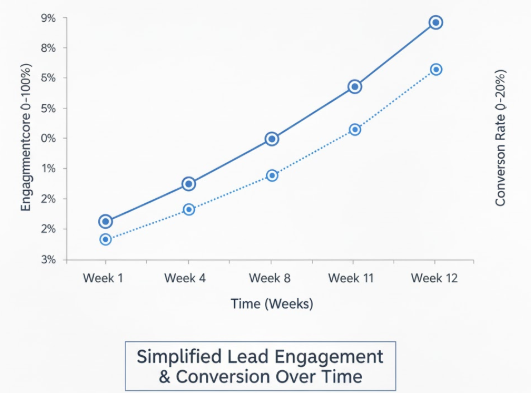
With automation, behavior is scored through organized grouping, focusing on how deeply prospects engage. Because of this, lead prioritization becomes clearer. Contextual details become available to sales, shaping conversations with better background insight. As a result, follow-up efforts shift toward relevance. When teams operate from shared signals, collaboration improves naturally. Marketing automation then functions less as messaging output, more as an engine influencing outcomes.
Personalization as a standard expectation
Personalized communication has become a baseline expectation in digital engagement. When information collections expand, adjusting each message manually turns unworkable. Systems that run automatically handle the issue using shifting group divisions along with rules-based content choices.
Zoho marketing automation enables personalization based on attributes, past interactions, and observed actions shape messaging. Relevance across large audiences stays achievable without sacrificing workflow smoothness. With Himcos, tailored systems reflect a company’s voice and character. Automated messages avoid robotic tones by design.
Behavior-driven engagement logic
What drives strong automation? Behavior does. Instead of fixed timing, messages respond to what users do. As interactions unfold, alignment stays consistent. Fewer unnecessary contacts occur because pacing follows engagement.
With automation, every exchange follows logically from what came before, avoiding repetitive content. Because of this flow, confidence grows steadily over time. Longer purchasing timelines, often seen with small business clients, respond well to such consistency.
Performance measurement and strategic insight
From precise tracking comes clearer responsibility in marketing. Because machines log activity without gaps, patterns emerge over time- spanning efforts, paths, media. When decisions follow those patterns, they rest on evidence instead of guesswork.
Metrics appear unified through Zoho marketing automation system, displayed across shared views. When behaviors lead to results, patterns emerge and clarity follows. Himcos assists in interpreting these insights within broader business contexts, enabling leadership teams to connect marketing activity with strategic objectives.
Continuous optimization through automation
With automation, processes improve step by step instead of running once without change. Because results are measured, campaigns shift based on what the numbers show after review. When adjustments follow insight, systems respond more reliably under shifting conditions.
Through structured reporting and scheduled evaluations tied to company objectives, Himcos enables alignment across operations. As markets shift and organizations expand, automation transforms, continuously shaped by real-world demands.
Scalability without operational risk
Scaling operations become simpler due to marketing automation systems. As businesses grow, manual workload does not rise at the same rate. Processes adjust smoothly when more leads appear or campaigns run more often. Stability remains even under heavier demand.
Progress in business maturity allows gradual integration of Zoho marketing automation tools. As needs evolve, so does functionality introduced step by step. Guidance from Himcos ensures each phase fits long-term direction without strain. Sustainability emerges naturally when growth and tool use advance together.
Data governance and trust in marketing systems
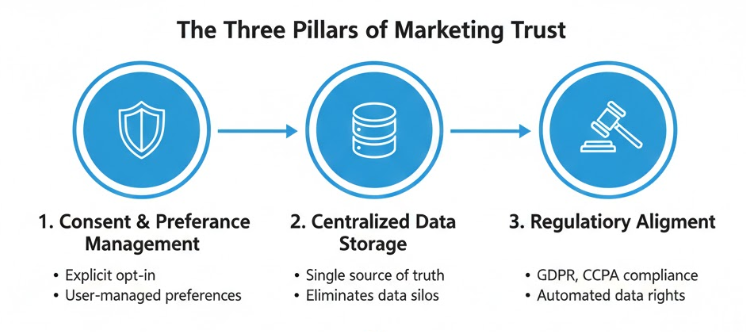
Structured data handling has become central to marketing credibility. Organized consent management, preference tracking, and centralized data storage support responsible engagement practices and strengthen trust.
Zoho marketing automation includes structured data management features that support transparency and control. Proper configuration through Himcos ensures these systems align with regulatory expectations and internal governance standards, reinforcing long-term credibility.
Managing complexity during business expansion
With expansion, small businesses face rising intricacies in operations spanning departments, locations, areas of service. A framework enabled by marketing automation tools brings cohesion, allowing alignment while preserving adaptability.
Operating from a unified base, Zoho marketing automation system supports tailored adjustments within defined limits. Through careful alignment, Himcos preserves this equilibrium, supporting growth that keeps messaging uniform and processes transparent.
The strategic role of implementation expertise
Success in automated marketing does not come only from choosing a platform. What matters is how it is set up, used, applied over time. Smaller firms often find they do not have enough staff or skill to handle such tasks alone.
A well-organized approach defines how Himcos links Zoho tools to company goals. Beginning with process design, the focus shifts toward sustained results over isolated setups. Evaluation follows naturally, ensuring each phase contributes beyond initial launch. Long-term function matters more than short-term activation. Growth emerges through consistent alignment, not standalone fixes.
Automation and long-term brand consistency
Gradually, automated systems shape how a brand is viewed by maintaining steady messaging along with prompt responses. Without gaps in contact, people begin to recognize reliability instead of disjointed exchanges. This ongoing rhythm supports deeper connections, making return visits more likely. Eventually, familiarity builds not from intensity but from regularity.
Throughout the customer journey, Zoho marketing automation maintains consistent support. Brand alignment stays central when Himcos guides automated processes, focusing beyond mere operational speed.
Marketing automation as a business requirement
Marketing automation now functions as a core operational requirement rather than an optional efficiency tool. As digital channels multiply and customer journeys extend across time and platforms, manual coordination no longer sustains consistency or visibility. Disconnected actions, delayed responses, and fragmented data weaken marketing’s ability to support growth. Automation addresses this structural gap by establishing continuity in execution, ensuring that engagement, follow-up, and measurement occur without disruption. What once worked through individual effort now requires system-driven coordination to maintain relevance and reliability at scale.
A unified marketing automation framework supports sustained operations by linking strategy with execution over time. With Zoho marketing automation in place, workflows align with evolving business demands while maintaining clarity across teams and touchpoints. When implemented through Himcos, the system reflects organizational priorities instead of operating as a standalone tool. This alignment allows businesses to move forward with confidence, knowing that engagement processes, data handling, and performance tracking remain consistent as complexity increases. Marketing automation, in this sense, becomes part of the business structure itself supporting growth through stability, accountability, and long-term operational control.