In 2026, organizations work within a CRM landscape driven by market rivalry, higher client demands, or the push for clearer operations. Since digital processes now span sales, support, and outreach, these systems play a bigger role in performance alongside choices made daily. In the Zoho CRM vs Salesforce, one sees different ways to handle large-scale customer interactions.
Zoho CRM offers wide-ranging tools via clear pricing plus straightforward setup. Its rich features remain user-friendly, enabling quicker team integration. Unlike that, Salesforce prioritizes large-business adaptability backed by a vast network, usually requiring greater costs along with management effort. When comparing fundamental CRM functions, Zoho CRM tends to emerge as the better-rounded choice for expanding companies.
Table of Contents
What is Zoho CRM and Salesforce?
Zoho One offers features like lead tracking, automated workflows, smart analytics, plus communication across channels. Its 2026 updates build on this by introducing Team Spaces for broader access, enhanced Cadences that support sales tasks, Kiosk Studio enabling step-by-step guidance, along with QuickML allowing simple machine learning without coding. These additions extend CRM use from just sales to include operational and managerial roles, reinforcing the Zoho CRM vs Salesforce differentiation.
Salesforce keeps pushing AI forward through Agentforce, embedding self-operating tools into sales and support processes. Alongside this, multimodal capabilities plus specialized industry bots define the upcoming 2025 launch. Even so, setting up systems can still be challenging. In comparison to Zoho One, the latter provides wider accessibility while avoiding complex setup demands.
Organizations like Himcos, working with data and software updates, use simple methods when handling customer workflows along with extended projects further illustrating the Zoho CRM vs Salesforce contrast.

Pricing comparison: Zoho CRM vs Salesforce
Pricing remains a decisive factor in any CRM vs Salesforce evaluation, especially as companies focus more on lasting affordability instead of quick wins from features. Decisions now weigh overall expenses, clear pricing models, also how easily systems grow without overspending. In this context, Zoho One often stands out as the leaner choice versus Salesforce. Core packages already include high-level tools, so extra costs for plugins or plan jumps drop sharply. That setup helps teams forecast spending better while linking software use directly to daily needs not technical overload but keeping Zoho one firmly competitive where value matters most.
Cost structure overview
Zoho CRM offers a no-cost edition for teams of three, including contact management, deal tracking, and basic workflow tools. Starting at $14 monthly per person, the paid tier for Standard is available on an annual contract; next comes Professional priced at $23. The Enterprise option runs $40 each month, whereas Ultimate costs $52 yearly per user. Artificial intelligence for sales predictions is built into these levels, along with automated processes, stock handling features, plus app connections, this sets an important distinction in the Zoho CRM vs Salesforce pricing comparison.
Salesforce begins at roughly $25 monthly per user with its Starter Suite, though prices climb quickly for Sales Cloud versions. High-level capabilities usually go beyond $150 each user each month; tools like Agentforce demand extra fees on top. Because of this setup, it significantly alters the overall Zoho CRM vs Salesforce cost equation.

Annual savings analysis
Organizations switching from Salesforce to Zoho CRM typically see costs drop by 70–90%, especially when supporting many users or complex workflows. For medium-scale setups, yearly savings can hit tens of thousands after factoring in licenses, extra tools, and management effort. This saved budget enables firms to focus more on key goals like growing marketing efforts, improving data insights, or advancing product design, reinforcing the long-term financial advantages highlighted in the Zoho CRM vs Salesforce comparison.
Himcos uses Zoho CRM’s consistent pricing in healthcare, constructions, manufacturing, asset management and auto projects, keeping expenses steady during each phase. Because costs stay fixed, budget shifts don’t delay execution or affect client planning which strengthens value when comparing Zoho One to Salesforce.
Lead and contact management capabilities
Zoho One offers native business card scanning; its AI assistant Zia enables smart lead ranking. Social media helps find prospects, while data comes in through website forms or chat, also by phone. Forecast-based scoring works alongside auto-updated profiles to support consistent follow-ups right from first contact.
Salesforce gives full lead tracking, although deeper capture often needs third-party apps or coding. In the Zoho CRM vs Salesforce comparison, Zoho CRM delivers built-in lead features right away cutting down configuration time.
Automation and workflow execution
Automation plays a key role in the Zoho CRM vs Salesforce comparison, especially for organizations wanting consistent team performance. Instead of freeform methods, Zoho CRM uses Blueprint to lead users step-by-step through set phases, including checks, authorizations, and locked progressions. For broader actions, cadences link together emails, calls, texts, and tasks based on how leads respond triggered by specific conditions. Because of this setup, processes run reliably with less need for hands-on control.
Salesforce automation uses Flow extensively, flexible for tough cases, yet needs heavy setup when handling multiple steps or channels. In day-to-day usage, the Zoho CRM vs Salesforce distinction becomes evident through faster automation readiness within Zoho CRM, where workflows move from design to execution with fewer dependencies. That speed leads to stable processes sooner and clearer results over time.
AI and analytics
Zoho One uses AI via Zia, helping with forecasts, spotting customer drop-offs, finding irregularities, and also recognizing repeated actions. Because of QuickML, teams can create machine learning models even without coding skills. By 2026, new upgrades will boost these features, adding tools that generate content, smart prompts aware of context, besides independent Zia Agents working inside regular processes.
Salesforce enhances Agentforce using reasoning systems along with self-running agents. Still, complicated setups paired with extra license needs often shape how companies adopt it. Within the Zoho CRM vs Salesforce AI comparison, Zoho offers smart tools built directly into everyday workflows.
Customization and interface design
Zoho CRM includes Canvas, which supports simple layout changes through dragging elements. Because of this feature, users can quickly build personalized screens, dashboards, or access points tailored to roles. Settings driven by prompts make it easier to adapt setups quickly no matter the team type or business field.
Salesforce Lightning allows detailed customization, yet typically needs admin support. The Zoho CRM vs Salesforce usability contrast highlights Zoho CRM’s focus on configuration without dependency on specialists.
Native links between Zoho One tie sales data to finance, people management, stock, and daily workflows. By using this setup, Himcos ensures smooth change efforts while strengthening how well Zoho One aligns with operational systems instead of relying on Salesforce.
Ease of implementation and adoption
Implementation speed plays a major role in the Zoho CRM vs Salesforce decision-making process. Usually, Zoho gets up and running in just a few weeks because it offers step-by-step setup guidance, user permissions by role, along with straightforward menus. Features like Team Spaces together with Kiosk Studio help teams work together clearly while needing little time to learn.
This quicker release lets teams start with automation, reports, or pipeline tools sooner in the process, so internal groups keep more say over settings, cutting dependence on outside experts at launch.
Salesforce setups usually take many months, mainly because of complex settings and heavy reliance on consultants. That contrast plays a big role when comparing how fast Zoho CRM delivers results versus Salesforce. Longer launch periods tend to push back operational consistency while raising upfront costs before any real benefits appear.
Scalability and business fit
Zoho CRM helps businesses of all sizes from new startups to big corporations with tools used by over 250,000 clients worldwide. As companies grow, different versions adapt accordingly; meanwhile, improvements in 2026 bring better region control along with built-in quoting features suited for intricate sales setups.
This scalability approach helps companies grow features gradually when operations become more advanced instead of adopting complex systems too soon. Zoho development stays matched to how organized and prepared the business is.
Salesforce still leads in massive setups yet adds management layers plus expenses many midsize firms don’t need. For growing organizations, the Zoho CRM vs Salesforce comparison increasingly favors Zoho CRM’s balanced scalability model. Its design allows steady growth while avoiding early-stage complications or heavy operational demands.
Integrations and ecosystem comparison
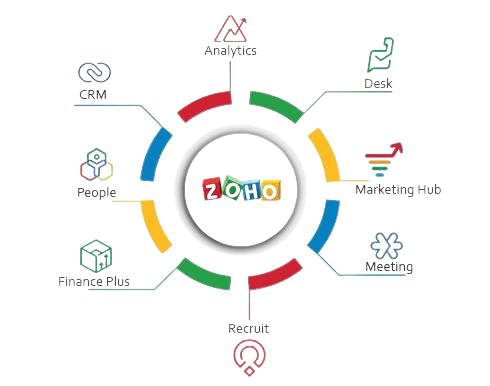
Zoho CRM works directly with more than 55 Zoho apps using Zoho One, including tools for finance, HR, marketing, or daily tasks. For extra connections, users can rely on Zoho Flow, API access, Zapier, along with Marketplace options linking services like Google Workspace, Microsoft Teams, WhatsApp, QuickBooks, plus Mailchimp.
Salesforce offers broad tools via AppExchange and MuleSoft; however, multiple connections often increase overall costs. Within the Zoho CRM vs Salesforce ecosystem discussion, Zoho enables smooth workflows while keeping integration spending low.
User feedback and market perception
Zoho CRM gets positive feedback on leading review sites, holding a steady 4.4 rating on Gartner Peer Insights while matching that performance on G2 and Capterra. Users often point to fair pricing relative to features offered, straightforward navigation layouts, along with reliable assistance regardless of subscription tier. Trends in reviews show lasting approval from smaller to medium businesses, especially when simple management and stable expenses guide their choice.
Salesforce scores about the same overall, showing strong features plus fit for big operations. Still, users frequently mention issues with complicated setup, longer training periods, or slow adoption rates. In the broader Zoho CRM vs Salesforce perception analysis, Zoho CRM tends to match better with lower cost, simpler workflows, also easier daily use strengthening its draw for teams wanting steady performance minus management overload.
Why Zoho leads the Zoho CRM vs Salesforce comparison in 2026
Zoho CRM leads the comparison in 2026 through platform-level integration rather than isolated feature delivery. Because AI-powered analysis, automated actions, and data tracking work inside organized sequences, teams stay aligned across functions. With this method, gaps between strategy, action, and review shrink; companies keep operations clear even as they grow. Rather than adding complexity, it streamlines how tasks flow from start to finish.
Within the Zoho CRM vs Salesforce landscape, Zoho shows stronger alignment across departments. Since sales, support, finance, and operations share one integrated platform, information flows smoothly resulting in consistent insights. Because everyone works from the same central database, choices rely on accurate data rather than duplicated efforts or extra tools.
When business needs change, Zoho One stands out more than Salesforce by adjusting smoothly. Instead of causing interruptions, it builds new workflows right into current systems. Reporting updates flow naturally into daily use, avoiding setbacks. Over time, this consistency helps teams stay productive without constant retraining. For companies aiming to grow steadily, such reliability proves essential. Process improvements happen quietly without overhauls or downtime.
Zoho CRM as a long-term CRM choice
In 2026, picking a CRM focuses more on results, reliability, while keeping control over workflows. When comparing cost, automated tasks, artificial intelligence features, ease of use, along with connections to other tools, the Zoho CRM vs Salesforce comparison consistently highlights Zoho as a platform aligned with controlled growth and operational continuity.
Although certain systems emphasize heavy customization, Zoho CRM prioritizes real-world usability. For Himcos, this means operations rooted in transparency, consistency, besides trackable results. Within long-term CRM planning, the Zoho CRM vs Salesforce analysis positions Zoho One as a stable foundation that adapts to evolving business objectives without redefining them.