
Zoho One acts like a central hub for modern businesses, combining over 50 apps into one place to handle sales, money matters, daily tasks, and interactions with customers. Still, expanding firms usually rely on extra tools beyond just this setup. That’s when links to outside software become essential and these connections boost what Zoho can do by syncing it with common third-party platforms, supporting Zoho One integration with third party apps. For instance, hooking up payment processors or messaging via WhatsApp cuts down hands on work, speeds up replies, and keeps information aligned across programs. As a result, transactions flow easier, client messages get quicker responses, and processes stay uninterrupted all without needing heavy coding.
This blog explores the feasibility of Zoho One third party integrations, with a specific focus on payment gateways and WhatsApp, explaining how these connections operate in real-world business settings. Insights from Himcos, a specialist in Zoho-based solutions, add practical perspective based on hands-on implementation experience.
Table of Contents
Understanding Zoho One third party integrations
Zoho One works with outside tools to link its apps to other platforms, so information moves smoothly while reducing hands-on work. Instead of coding, users rely on helpers like Zoho Flow or Zapier that make setting up easier. Each app inside Zoho like CRM or Billing also connects directly to common services, boosting how well things fit together. Companies use these links to run tasks nonstop, keep data in sync across systems, and get more done each day. As an example, messages to clients or payment steps happen by themselves through linked software.
The design enables Zoho One third party integrations using APIs along with ready-made connections. Through a single dashboard, admins handle internal Zoho links, external add ons, or cross-platform ties offering one-point oversight. Setup becomes easier this way; tools such as domain checks and user removal show how it works in practice. External app linking within Zoho One is achievable for businesses large or small since secure information sharing plus live syncing are supported.
Payment gateway integrations in Zoho One
Supported global and regional payment gateways
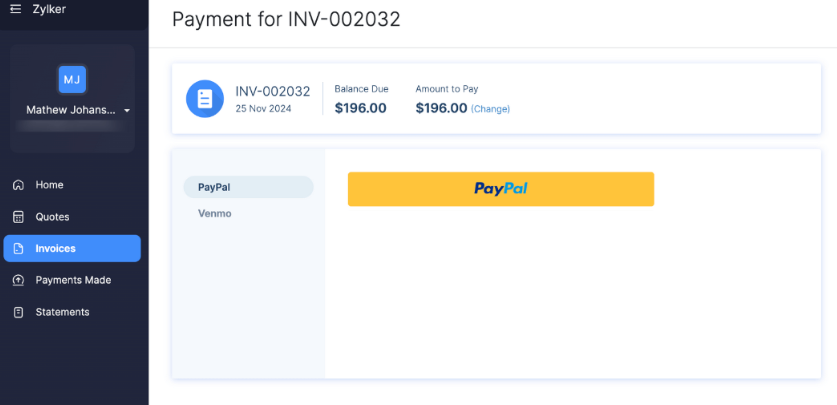
Through Zoho One third party integrations, payment gateways work straight with Zoho One tools such as Billing, Inventory, or Payments, handling both worldwide and regional providers. Stripe, PayPal, Authorize.net, also Razorpay link smoothly to manage invoices, repeat charges, plus single transactions. Through integration with these services, Zoho Billing helps collect money automatically, cutting down wait times in income flow. Companies set up these links through control menus, by adding authentication codes while choosing options related to money types or geographic areas.
Configuration process and ease of setup
Feasibility stays strong since Zoho One third party integrations works easily with external payment systems, needing little tech skill. Configuration means picking a provider from the list then confirming login details usually done fast. Advantages cover auto created invoices and receipts, while info flows through all tools for correct accounting records. With Zoho Inventory added, sales connect directly to product stock, adjusting quantities once deals finalize. Himcos supports using these links for online stores, highlighting steady performance during busy sale periods.
For instance, connecting to Stripe handles card transactions safely while meeting PCI rules through secure methods.
Real-time transactions and regional flexibility
PayPal supports diverse payment methods, including digital wallets, which broadens customer options and improves payment flexibility for businesses. These connections operate in real time, reflecting payments instantly in Zoho Books for immediate and accurate accounting updates without manual effort. This real-time synchronization helps maintain clear financial visibility and reduces reconciliation errors. Challenges such as regional availability are addressed through alternative supported gateways, ensuring uninterrupted payment processing and broad applicability across different markets and business models through Zoho One third party integration. The following sections highlight practical examples of Zoho One integration with third party apps in real business environments.
WhatsApp integrations in Zoho One
WhatsApp business API connectivity
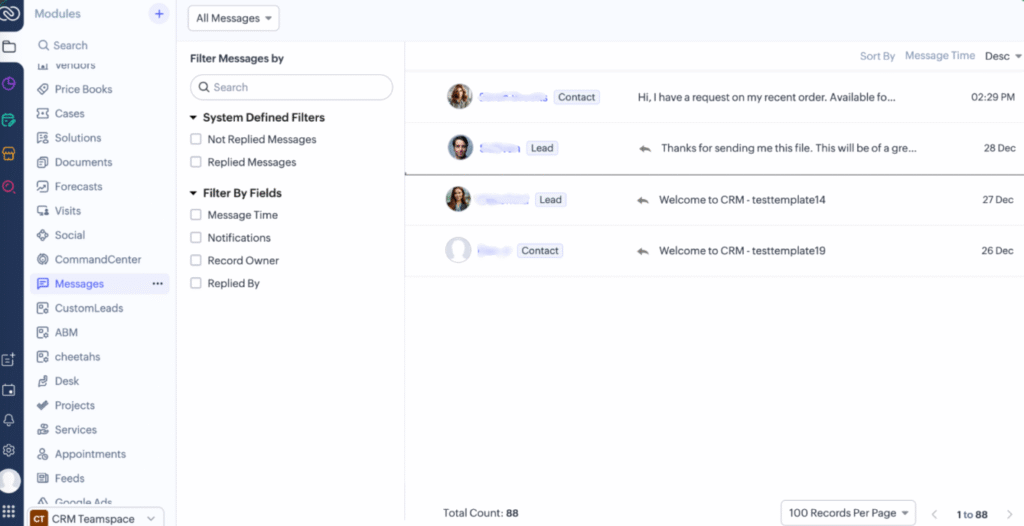
WhatsApp Business API links to Zoho One tools like CRM, Desk, and SalesIQ to support client communication, forming a key part of Zoho One third party integrations. By connecting these platforms, alerts are delivered automatically while inquiries get managed efficiently across systems. Conversation logs stay synced inside the ecosystem through this setup. Zoho CRM incorporates WhatsApp to engage leads and contacts, storing interactions in records for contextual follow-ups. Setup involves linking a WhatsApp Business account via API, with Zoho providing configuration guides.
Feasibility and official integration support
Zoho One third party integrations with WhatsApp demonstrate strong feasibility, supported by official partnerships and tools. Businesses activate this through marketplace settings, enabling features like automated replies and message templates. Zoho Billing uses WhatsApp for invoice alerts and payment reminders, improving collection rates. Similarly, Zoho FSM dispatches job updates and technician details via messages, enhancing service delivery.
Implementation, messaging flow, and scalability
Implementation steps include obtaining WhatsApp approval for business use and integrating via Zoho’s interface. Messages flow bidirectionally, allowing responses from within Zoho apps. This setup maintains a unified repository of communications, aiding compliance and analysis. Limitations, such as message volume caps, manage through scaling plans, making it suitable for growing enterprises. The design enables Zoho One third party integrations using APIs along with ready-made connections, forming a reliable Zoho One integration with third party apps ecosystem.
Other notable Zoho One integration with third party apps
Beyond payments and messages, Zoho One works with many third party services. Google Workspace ties in for emails, along with shared documents, helping teams work together. Microsoft 365 connects using similar features. Online stores such as Shopify sync through Zoho Inventory to handle orders. WooCommerce does the same. Tools like Mailchimp join up so marketing fits customer records. HubSpot also links this way.
Analytics tools like Google Analytics link with Zoho to reveal data patterns. Meanwhile, Tableau pulls information for clearer reporting. Social networks – Facebook, for example support capturing leads. Twitter also helps monitor user interaction. These links use Zoho Flow to set up tailored processes. These links use Zoho Flow to set up tailored processes within a Zoho One third party integration environment. Actions such as sending updates run automatically. Pre-made setups improve practicality. They cut down setup effort significantly.
HR platforms such as BambooHR link up with Zoho People through payroll software. Task tools including Asana or Trello connect directly to Zoho Projects. Such variety supports customized setups meeting distinct company demands. According to Himcos, these links improve how resources are used driving expansion even without new systems.
Assessing feasibility
Whether Zoho One works well with third party apps depends on how compatible, secure, and scalable they are. Its API network connects more than 1,000 applications through Zoho Flow, allowing wide-ranging links. Configuration stays consistent no matter the integration, while guides and help speed up use. Higher-tier plans or external services may cost extra; however benefits appear as fewer mistakes and less time spent, supporting Zoho One integration with third party apps.
Security measures such as encrypted data and user permissions keep connected systems safe. Where needed, adherence to rules like GDPR or HIPAA is maintained. Security measures such as encrypted data and user permissions keep connected systems safe within a Zoho One third party integrations setup. As businesses grow, system capacity expands accordingly – supporting higher workloads smoothly. Function tests are run ahead of rollout, enabling tweaks prior to launch.
Potential challenges involve API rate restrictions or changes in versions – handled via regular checks and adjustments. Learning tools provided by Zoho help users get more benefits. In general, Zoho One’s external connections provide a workable way to improve workflows; results show most setups succeed.
Implementation strategies
Strategies for implementing Zoho One third party integrations begin with needs assessment, identifying gaps in current processes. Selection of integrations follows, prioritizing those with native support. Configuration occurs in stages, starting with authentication and progressing to workflow mapping.
Monitoring tools track performance, alerting to issues. Regular reviews optimize setups, incorporating new features. Partnerships with experts, like Himcos, streamline complex integrations, providing customization where needed. Case studies show businesses achieving 30% efficiency gains through targeted connections.
Benefits and Future Outlook
Benefits from Zoho One third party integrations include unified data views and automated routines, leading to informed decisions. Customer satisfaction rises with timely communications via tools like WhatsApp. Financial accuracy improves through payment gateway links, minimizing discrepancies, highlighting the value of Zoho One integration with third party apps.
Future developments promise expanded integrations, incorporating AI for predictive automation. Zoho’s updates, such as unified panels, indicate ongoing enhancements. Businesses position themselves advantageously by adopting these now, preparing for evolving demands.
In conclusion, third-party integrations of Zoho One present a feasible and effective means to augment business capabilities, particularly with payment gateways and WhatsApp. Organizations harness these to drive productivity and competitiveness.
Himcos approach to Zoho One third-party integrations
Himcos delivers Zoho One third-party integrations that expand platform capabilities by connecting Zoho applications with widely used external systems such as payment gateways and WhatsApp. Payment integrations link Zoho Billing, Books, and Inventory with providers like Stripe, Razorpay, and PayPal, allowing transactions, invoice updates, and financial records to stay aligned across applications. WhatsApp integration connects Zoho CRM, Desk, and SalesIQ, enabling centralized message handling, automated alerts, and recorded customer interactions without switching platforms or adding manual effort.
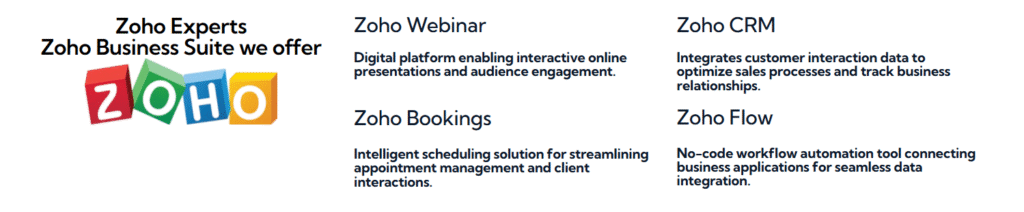
These Zoho One integrations with third-party apps reduce repetitive tasks, accelerate operational workflows, and maintain consistency across business systems through native connectors, APIs, and Zoho Flow. Himcos applies implementation strategies that limit custom development while supporting scalability and long-term adaptability. As a result, organizations operate with greater process clarity, faster communication cycles, and improved data continuity across departments within the Zoho One environment.