
Most customer journeys break because marketing and sales systems operate separately. Marketing tracks engagement through campaigns, emails, and website interactions. Sales teams manage conversations and opportunities inside Zoho CRM. When these systems are not connected, valuable engagement insights never reach the sales team. A prospect might download resources, visit pricing pages, or attend webinars, but if this activity is not visible inside the CRM, sales conversations begin without context.
Integrating Zoho CRM with Zoho marketing automation solves this problem. Marketing engagement, behavioral data, and deal activity connect into one system that guides the entire customer journey. Organizations often work with implementation partners like Himcos to structure this integration so marketing signals directly support sales decisions and customer engagement.
Table of Contents
Quick insights
- Zoho Marketing Automation tracks customer engagement across campaigns and digital touchpoints.
- Zoho CRM manages contacts, deals, and sales activities.
- Integration connects engagement signals with customer records.
- Sales teams gain context about prospect behavior before outreach.
- Businesses create more responsive and personalized customer journeys.
Why disconnected systems hurt customer journeys
The biggest challenge businesses face is not lack of data. It is a lack of connected data. Marketing teams often run campaigns across multiple channels, tracking engagement through automation platforms. Meanwhile, sales teams manage relationships and deal pipelines inside CRM systems.
When these tools do not communicate with each other, several operational issues appear:
- Sales teams lack insight into marketing engagement.
- Marketing cannot measure campaign impact on revenue.
- Follow-ups happen too early or too late.
- Customer communication becomes inconsistent.
For example, a prospect might download multiple resources and attend a webinar, signaling strong interest. But if this information does not reach the CRM, sales teams may approach them with generic outreach instead of informed conversations.
Integration between Zoho CRM and Zoho Marketing Automation solves this challenge by allowing both platforms to continuously exchange data. The result is a connected system where every interaction contributes to a clearer picture of the customer journey.
How Zoho CRM and Zoho Marketing Automation work together
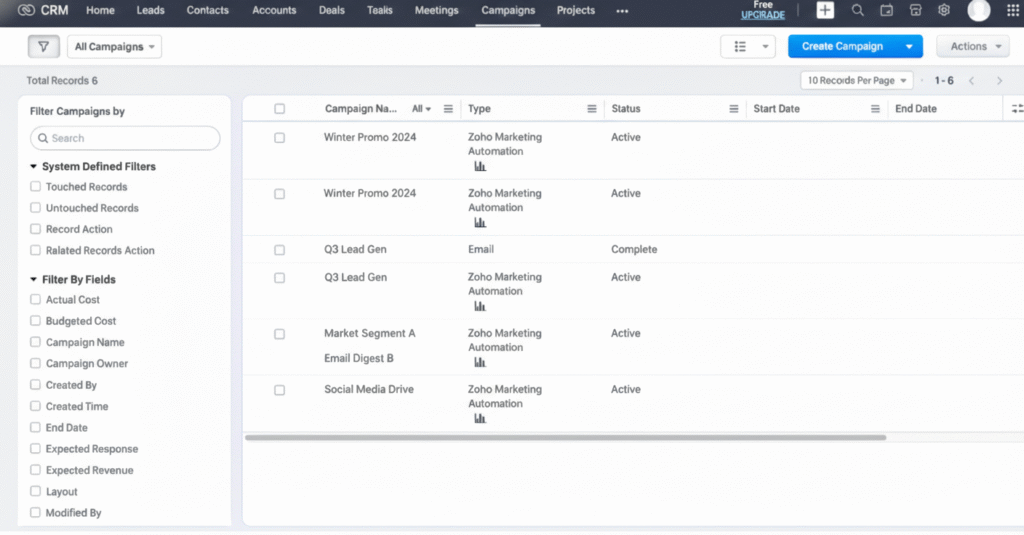
The integration connects marketing engagement with sales operations in real time. Zoho Marketing Automation manages campaigns, audience segmentation, and automated communication journeys. It tracks customer behavior across emails, landing pages, forms, and websites. Zoho CRM manages contact records, company profiles, sales pipelines, and communication history.
When these systems integrate, data flows in both directions. Marketing interactions automatically update customer profiles inside the CRM. Sales updates, such as deal stage changes, can trigger automated marketing workflows. This synchronization creates a continuous feedback loop between marketing and sales activities.
Instead of operating as isolated tools, the two platforms function as a single revenue-supporting system.
How integration creates smarter prospect journeys
Customer journeys begin long before a sales conversation takes place. With Zoho Marketing Automation, businesses can track early engagement signals such as website visits, email interactions, and content downloads. These signals provide insight into what prospects are researching and how their interest evolves. Once a visitor becomes identifiable, their engagement history automatically transfers into Zoho CRM.
Sales teams then gain visibility into the prospect’s digital behavior. Instead of approaching prospects with generic pitches, they can tailor conversations around actual interests and concerns. For example, if a prospect repeatedly engages with pricing content or product documentation, sales teams can approach the conversation with more relevant context.
This alignment between marketing signals and sales engagement makes customer journeys more responsive and efficient.
Personalization across the entire customer lifecycle
Personalization becomes far more effective when marketing and CRM systems share the same data. When Zoho CRM integrates with Zoho Marketing Automation, communication adapts automatically to customer behavior and lifecycle stages. Early-stage prospects may receive educational resources that help them understand potential solutions. As engagement increases, communication shifts toward deeper product insights and decision-support information.
Once a customer moves forward with a purchase, marketing automation workflows can trigger onboarding communication, training resources, or follow-up engagement. Because both platforms remain synchronized, communication stays relevant throughout the customer lifecycle.
Improving sales and marketing alignment
Misalignment between marketing and sales teams is one of the most common operational challenges businesses face. Marketing may generate strong engagement, but sales teams cannot see that engagement history. Meanwhile, marketing teams often struggle to understand how their campaigns influence pipeline outcomes. Integration between Zoho CRM and Zoho Marketing Automation brings both teams into the same data environment.
Sales representatives gain visibility into campaign engagement and prospect activity. Marketing teams gain visibility into deal progress and revenue attribution. This shared understanding improves coordination between departments while helping businesses refine their marketing strategies.
Automating lifecycle transitions
Customer relationships evolve through multiple stages, from early research to purchase and long-term engagement. Without automation, these transitions often rely on manual processes that slow down communication and create inconsistencies. Integrated systems allow lifecycle changes to trigger automated responses
For example, when a prospect progresses within the sales pipeline inside Zoho CRM, marketing workflows may adjust automatically. Educational campaigns may pause, while product-focused communication begins.
Similarly, once a deal is closed, onboarding workflows or customer engagement sequences can start without manual intervention. This automation ensures that communication always reflects the customer’s current relationship with the business.
Using analytics to continuously improve customer journeys
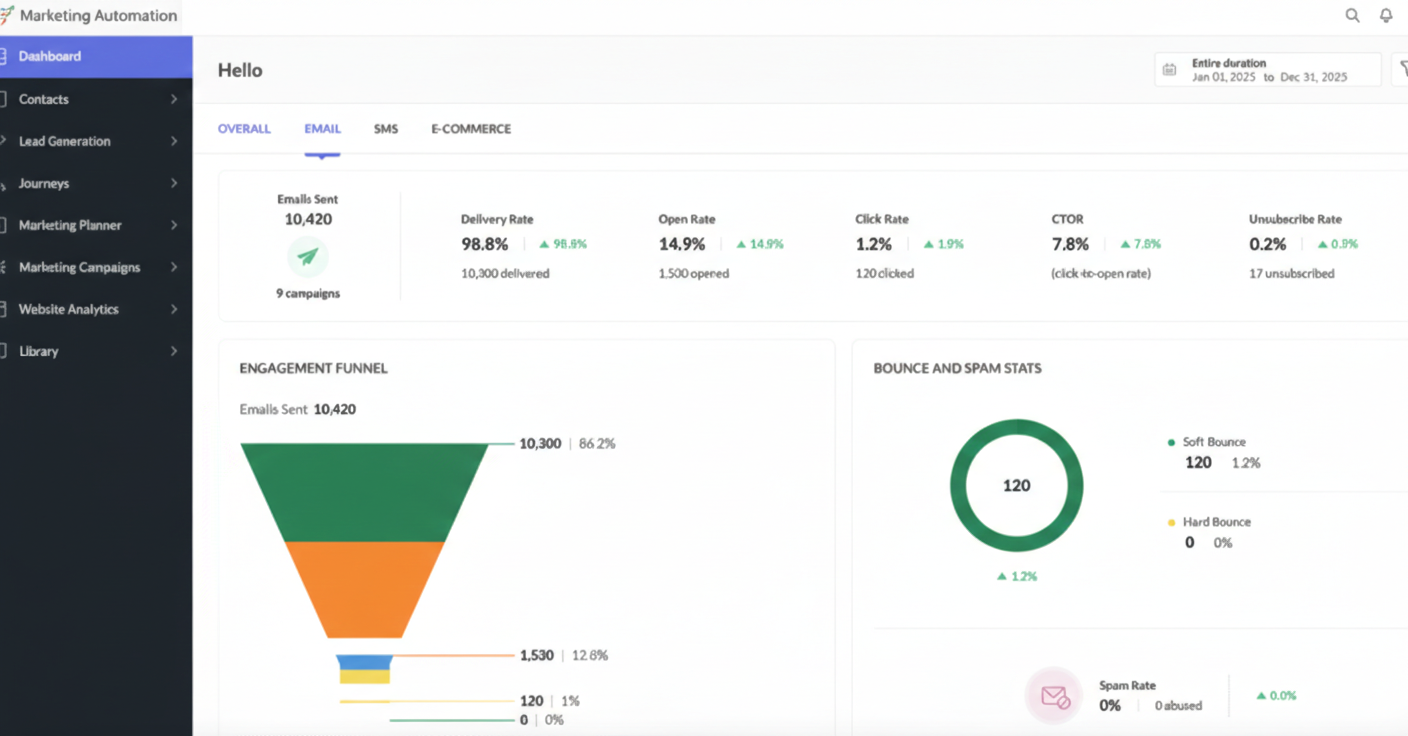
One of the strongest benefits of integrating CRM and marketing automation systems is improved analytics. Campaign engagement data from Zoho Marketing Automation can be analyzed alongside deal and revenue data from Zoho CRM. This combined insight helps organizations understand which campaigns influence customer decisions and which engagement patterns lead to successful conversions.
Businesses can evaluate which marketing channels contribute most to pipeline growth and adjust their strategies accordingly. Over time, these insights help organizations refine their customer journey strategies and improve campaign effectiveness.
How Himcos helps businesses implement connected customer journey systems
While integration between marketing automation and CRM systems offers powerful capabilities, achieving real operational value requires thoughtful implementation. Simply connecting platforms does not automatically create effective customer journeys. Businesses must design workflows, automation logic, and reporting structures that reflect their actual sales and marketing processes.
Himcos helps organizations implement structured business systems within the Zoho One ecosystem. Their approach focuses on aligning marketing automation, CRM pipelines, and operational workflows so that customer data flows seamlessly across departments. By structuring automation around real customer journeys, Himcos helps businesses turn disconnected tools into a coordinated system that supports predictable growth.
Key takeaways
- Modern customer journeys involve multiple digital interactions before purchase decisions.
- Zoho Marketing Automation tracks engagement across campaigns and digital channels.
- Zoho CRM manages customer relationships and sales pipelines.
- Integration connects engagement data with sales insights.
- Businesses gain a clearer view of the entire customer journey.
When these systems operate together, marketing engagement and sales conversations become more coordinated. Organizations can respond to customer behavior in real time, deliver more relevant communication, and build stronger long-term relationships.
For companies aiming to improve their customer journey strategy, integrating Zoho CRM with Zoho Marketing Automation provides the foundation for more intelligent, data-driven customer engagement.