
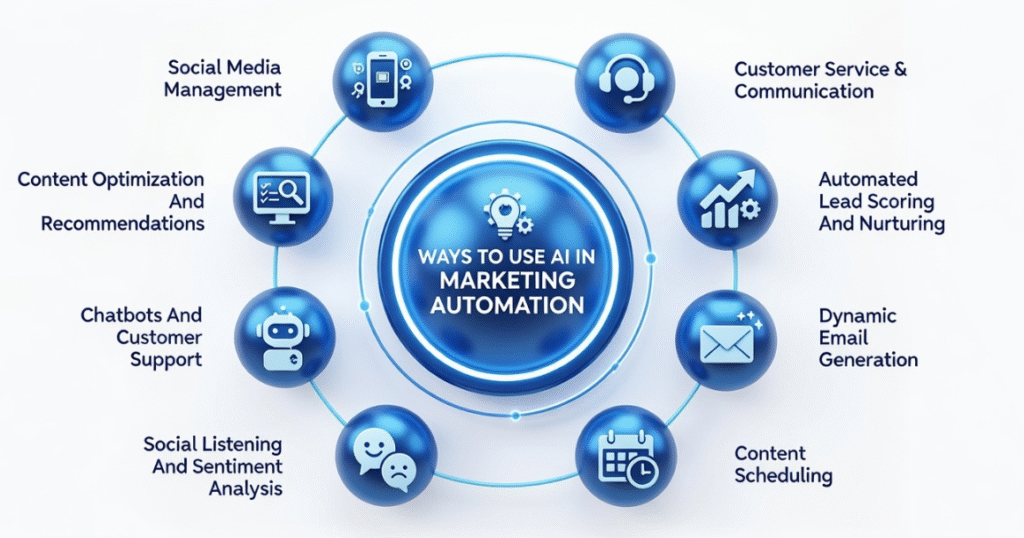
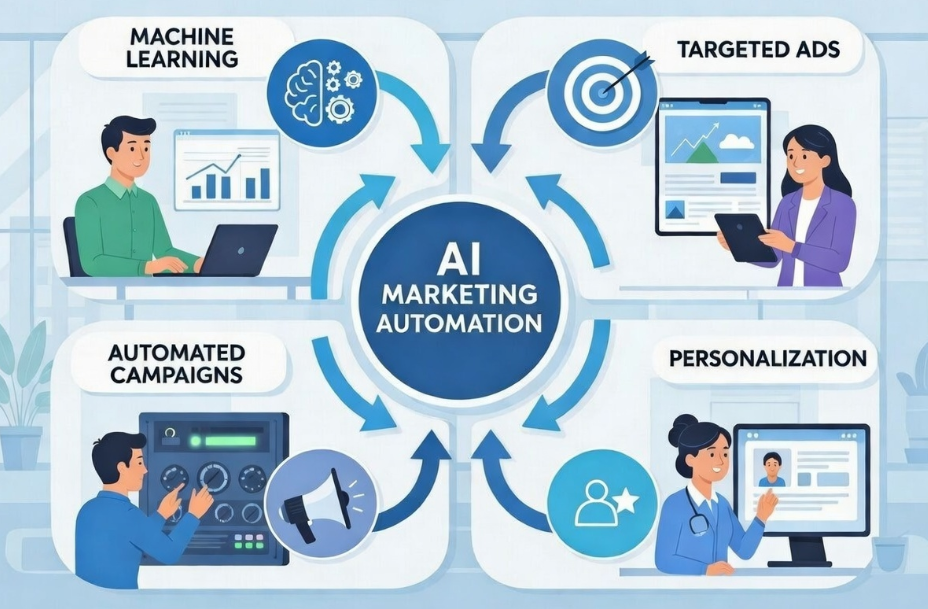
AI in marketing automation now shapes campaign management, interaction analysis, plus path tracking across intricate buyer processes. Rather than depending only on fixed instructions, current platforms employ algorithms that learn from data, detect trends, then modify outreach strategies based on insights. What once required manual oversight now shifts dynamically through pattern recognition. Decisions emerge not from static logic but from evolving digital behavior. Systems anticipate needs before explicit signals appear. Adjustment happens without human intervention, driven by continuous input flow. Complexity is managed silently behind the scenes.
What has changed shows how marketing now works differently, less about reaching many, more about connecting right. AI in marketing automation improves targeting by adjusting outreach based on behavioral probability rather than broad audience volume. Timing shapes response. Context defines fit. One follows another, not all at once. AI adjusts targeting based on behavioral probability models. Engagement increases when automated systems align messaging with observed user intent and interaction patterns. AI filters low-intent interactions by prioritizing signals that indicate genuine engagement readiness.
For businesses exploring how to implement these systems effectively, a quick consultation can clarify the right starting point: https://calendly.com/anuj-himcos/30min
Table of Contents
Understanding AI in marketing automation
AI in marketing automation uses methods like predictive analysis, data modeling, and machine learning. Vast quantities of information including both organized and raw are analyzed: website interaction, email engagement, past purchases, content consumption patterns.
Where older systems rely on fixed conditions, intelligence-driven processes assess likelihoods, purposes, and recurring behaviors. Depending on incoming information, choices about timing, material selection, or grouping individuals shift over time. Rather than sticking to pre-set paths, responses adapt through continuous input analysis. As a result, reliance on guesswork declines when strategies adapt to real consumer actions instead of preset notions. What changes is how decisions are shaped by observation over expectation.
From rules to learning systems
Back then, automated setups demanded thorough manual configuration. Each trigger, requirement, and result was outlined by marketers before launch. Though functional for basic tasks, these frameworks faltered when faced with growth or shifting demands.
Learning systems adjust workflows over time through AI in marketing automation. Driven by engagement records, upcoming choices evolve subtly. What campaigns achieve begins to define how messages are formed later. Automatically, customer reactions shift the direction of interaction sequences. With growth comes more steps in marketing work, yet time spent stays steady. When companies reach customers through many paths, intelligence built into systems handles the load. Complexity rises and effort does not follow.
Smarter audience segmentation
Marketing automation has long included segmentation as a central component. Rather than focusing only on fixed details like age, region, or prior buying history, earlier methods used rigid categories. With AI, patterns in user actions are analyzed alongside forecasts of future behavior. This shift introduces more dynamic criteria into group definition.
Behavior shapes how systems classify users, adjusting categories when actions shift. Groupings rely on response intensity, speed of involvement, material preferences, instead of conversion probability alone. As patterns transform, so do clusters keeping messaging tied to present motivations. Alignment follows movement, not fixed points. With shifting segments, messages become more relevant while outreach waste declines. Instead of wide-reaching methods, marketing adapts through precise interactions guided by live data.
Lead scoring and intent
Behavioral pattern-based scoring
What stands out within AI in marketing automation is its use in lead scoring. Rather than rely on static values for set behaviors, systems now assess behavior through layered trends. Patterns emerge not from single events, but by connecting sequences over time. How often someone acts, what steps they take, topics that hold their attention, response timing, alongside past results. These shape how intent is forecast. Scoring relies on likelihood, not fixed scoring models. Prediction shifts with patterns, not preset rules.
Alignment between marketing and sales
Better coordination emerges when marketing with sales aligns properly. Priorities adjust more smoothly as a result. Inaccurate qualification often causes tension and this method lessens that effect.
For businesses looking to refine lead qualification or align teams better, direct support is available through the contact form: https://himcos.com/contacts-simple/
Adaptive lead scoring frameworks
When patterns shift, systems like those used by Himcos adjust lead scoring through AI, ensuring alignment with current interactions instead of fixed rules. Over time, these frameworks reflect live feedback, guiding outreach based on observed actions. As behaviors change, so do assessments kept relevant without manual updates. This responsiveness maintains accuracy across campaigns even when expectations differ from actual responses.
Personalization at scale
AI in marketing automation enables personalization by adjusting message content, tone, and delivery timing based on observed user behavior rather than static profiles. Interaction history, response timing, and content engagement inform how automated systems modify communication in real time.
Instead of creating separate campaigns for different segments, AI-driven systems adapt output within a single automation framework. As engagement signals change, delivery cadence and message structure shift automatically, maintaining relevance without manual intervention.
AI-powered customer journey mapping
Non-linear customer movement
Customer journeys rarely follow linear paths. Movement into, out of, then back into engagement happens without pattern. Shifts between communication methods occur without warning. With AI in marketing automation, businesses observe each point of contact across digital spaces. These observations form clearer pictures over time.
Detecting exit points and return signals
Pathways, moments of exit, and signs of return are detected by machine learning systems. As conditions shift, automated flows adapt through offering different directions naturally over time. Because it adjusts, consistency stays strong between initiatives. Engagement grows over time when reactions follow real actions instead of expected paths.
Identifying hidden friction points
Through AI, journey mapping reveals subtle obstacles overlooked in broad summaries. Hidden gaps emerge clearly when patterns are analyzed over time. What seems minor in data can become significant through detailed observation. Insights appear where least expected, shifting focus to previously ignored details. Clarity grows not from volume, but from precision in interpretation.
Real-time decision making
Timing plays a critical role in engagement. Because patterns shift, systems assess present actions while comparing past records to guide choices. When signals arrive, responses like showing content, sending messages, or advancing user paths happen right away. Because decisions form quickly, the timing fits better with what users need at that moment. Immediate reactions shape interactions that feel more appropriate. Outcomes shift toward engagement when systems react without waiting. When conditions shift, automated responses take effect without human input. This cuts down on constant supervision by operating independently.
For teams aiming to implement real-time decision frameworks effectively, discussing use cases can help streamline adoption: https://calendly.com/anuj-himcos/30min
Content optimization using AI
AI in marketing automation influences not only delivery but also content performance. It shifts beyond timing into substance. Patterns emerge through study of how people respond whether they open, click, linger, or act. Insight grows from observing actions over time instead of assumptions. Outcomes guide adjustments without human guesses involved.
Patterns in viewer response shape how material, layout, and order evolve. Gradually, automated processes prioritize pieces matching what people engage with most. This step-by-step refinement enhances how well campaigns perform by reducing reliance on ongoing human-driven trials.
Data quality and integrations
When data lacks consistency, AI struggles to automate effectively. Without complete information, outcomes grow less dependable. Fragmented records weaken predictive strength. Accuracy fades where inputs are unclear. Starting from accurate inputs, AI functions best when information flows between marketing platforms, analysis software, one database to another. Oversight of data rules ensures uniformity remains intact throughout operations. Precision begins where organization ends.
When applying AI in marketing automation systems, service providers like Himcos begin with organized data frameworks. Reliable input shapes model behavior, scattered details do not suffice. Clarity emerges where structure leads. Foundations matter most before any algorithm runs Businesses needing help organizing these foundations can reach out directly here: https://himcos.com/contacts-simple/
Reducing manual effort
With time, systems adapt by using past results to refine processes. Repetitive setup becomes less necessary because adjustments happen without manual input. Outcomes guide changes, minimizing the reliance on constant supervision. Rules evolve internally instead of requiring frequent revisions.
With fewer hours spent updating automated systems, attention shifts toward long-term goals. Strategy gains momentum when routine tasks fade into the background. Creative choices emerge more freely without constant technical oversight. Planning for expansion becomes a natural outcome of streamlined workflows. This shift improves operational efficiency without sacrificing control.
Challenges in adopting AI in marketing automation
Despite its advantages, AI adoption presents challenges. Readiness of data matters, just as much as how teams coordinate their efforts. Gaps in expertise can shift results in unpredictable ways. Muddled goals weaken performance. Where integration supports purpose, AI performs more reliably. Strategy shapes outcomes when technology aligns with direction.
Achievement of uptake hinges on clear definitions, organized frameworks on ongoing adjustments follow naturally. What matters most emerges only after repeated testing; precision shapes outcomes slowly. Progress depends less on speed but more on consistent revisiting, subtle shifts piling up over time.
The future direction of AI in marketing automation
Progress in AI moves forward steadily. With progress in understanding human speech patterns, anticipating actions, behavior interpretation improves. Marketing automation systems that operate on their own grow more precise over time. Future adjustments come through sharper prediction methods. These shifts arrive quietly, yet reshape how tasks unfold behind the scenes.
One possible direction involves more tailored user experiences. Prediction accuracy could see notable improvements. Marketing, sales, and service may become more closely linked through unified platforms. Future readiness emerges when institutions establish clear structures now. Resilience follows from early preparation amid advancing AI. Stability grows where planning begins before technologies fully develop. his context, teams such as Himcos focus on structuring AI in marketing automation systems that remain adaptable as capabilities advance. By aligning data, workflows, and integrations early, these frameworks support steady evolution as automation becomes more predictive and autonomous.
How Himcos helps optimize AI-driven leads
Using AI in marketing automation goes beyond activating prediction features. Without organized information, synchronized processes, one team’s output becomes another’s obstacle. From observation patterns to past conversions, insights form the base of accurate lead evaluation systems. Revenue goals shape these frameworks just as much as customer actions do. Rather than depending on preset rules, decisions emerge from examined behaviors. Models evolve using input collected across departments. The result aligns scoring mechanisms with meaningful indicators, not incidental clicks. Coordination between outreach and closing stages ensures consistency.
Frameworks adapt because reality shifts faster than templates allow. Precision comes not from speed but from deliberate structure. One insight builds upon another until relevance emerges clearly.
Following initial configuration, Himcos enables ongoing adjustments. When patterns in user actions change, assessment frameworks undergo review and modification, ensuring synchronization with current engagement metrics. Connections linking promotional tools to client records receive regular optimization, supporting uniformity among teams. Such methods help AI in prospect evaluation remain flexible, trustworthy, while reflecting tangible performance results.