
Business growth introduces complexity faster than most systems can handle. Teams expand, tools increase, and information begins to scatter across platforms. What initially worked for a small team starts breaking under scale.
Sales teams track leads in one system, finance manages invoices elsewhere, and support conversations remain disconnected. Even with tools like Zoho CRM in place, lack of integration creates delays, missed follow-ups, and unclear visibility into performance.
At this stage, the benefits of Zoho One become more relevant as businesses look for a way to connect systems and improve execution.
Over time, decision-making slows down because reliable data is not available in one place. This is where a connected system becomes necessary to restore clarity and control.
Table of Contents
Quick overview of changes with Zoho One
- Zoho One brings business functions into a single connected environment
- It reduces dependency on manual coordination between teams
- It improves visibility through real-time dashboards and shared data
- It aligns sales, finance, support, and HR into one structured workflow
- It supports consistent execution as the business scales
Real problem: Fragmented systems, not lack of tools
Most growing businesses do not lack tools, they lack connection between those tools.
Different departments operate in silos. Sales closes deals without immediate visibility for finance. Operations start work without complete context. Support teams respond without knowing the customer’s full history.
This fragmentation leads to repeated work, delayed execution, and inconsistent customer experience. The issue is structural, not operational.
Why operational inefficiency increases
As businesses grow, inefficiencies multiply due to system limitations.
Manual handovers between teams introduce delays. Data entered in one system does not reflect in another. Reporting depends on compiling spreadsheets from multiple sources, which reduces accuracy.
Without standardized workflows, every team member executes tasks differently. This creates inconsistency, especially during rapid hiring phases. Over time, these small inefficiencies turn into major execution gaps.
How Zoho One connects entire business
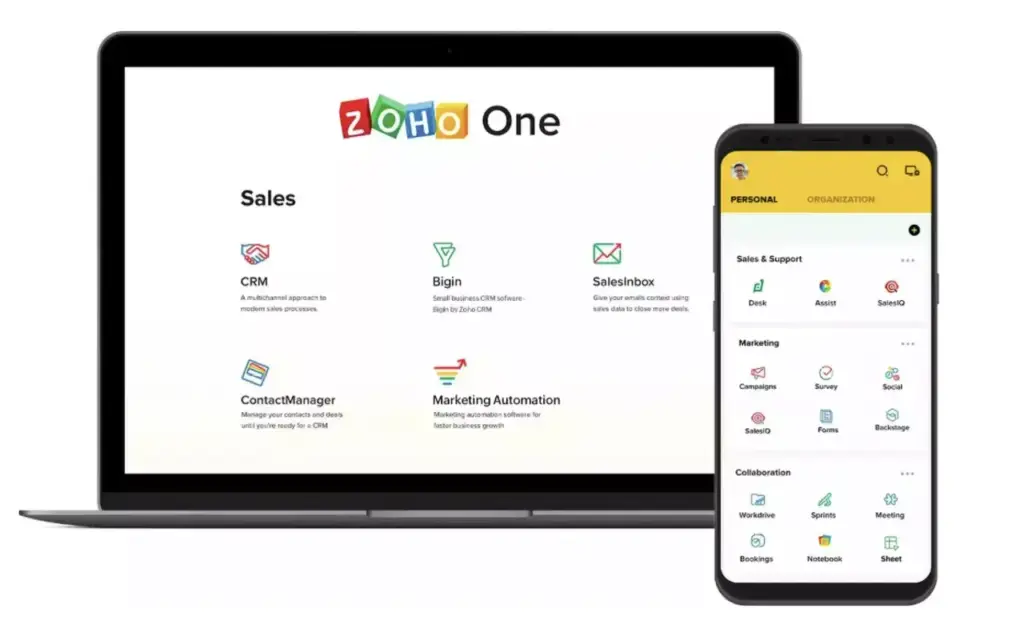
Zoho One functions as a unified operating system for business processes.
It connects CRM, finance, support, HR, and collaboration tools into one ecosystem where data flows continuously. Instead of switching between multiple applications, teams work within a connected structure where each action triggers the next step.
This approach reduces dependency on manual coordination and creates a predictable execution flow across departments.
10 Proven benefits of Zoho One
1. Centralized communication and collaboration
All communication emails, notes, calls, and internal discussions remain linked to specific deals, projects, or support tickets. This removes the need to search across platforms and gives every team member full context before taking action.
2. Structured workflows across departments
Business processes follow a defined path. When a deal is closed, execution begins automatically. Projects are created, invoices are generated, and teams receive task assignments without delays using tools like Zoho Projects and Zoho Books.
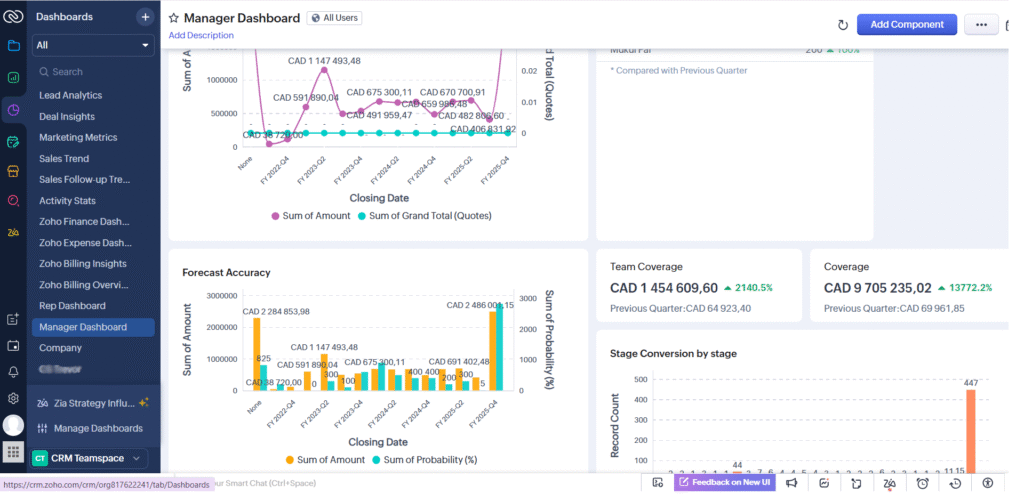
3. Real-time dashboards for complete visibility
Instead of relying on weekly reports, decision-makers access live dashboards showing sales performance, revenue, support load, and project progress. This improves response time and reduces dependency on manual reporting.
4. Sales pipeline clarity and better forecasting
Sales pipelines become structured with defined stages and required actions. Forecasting improves because predictions are based on real activity rather than assumptions.
5. Complete customer history in one place
Every interaction, sales conversations, purchases, and support requests—is stored in one system. This improves communication quality and increases the chances of repeat business.
6. Unified customer support system
All customer queries, whether from email, chat, or calls, are managed in one place through systems like Zoho Desk. This reduces response gaps and maintains consistency across channels.
7. Real-time financial tracking and control
Financial data updates instantly as transactions occur. Invoices are generated immediately after deal closure, and cash flow visibility improves. This reduces delays and improves financial planning.
8. Data-driven decision-making
Leadership gains access to connected insights across marketing, sales, and operations. Trends become visible early, allowing faster and more informed decisions.
9. Automation reduces repetitive workload
Routine tasks such as lead assignment, reminders, approvals, and notifications run automatically. This reduces dependency on manual effort and allows teams to focus on high-value activities.
10. Faster onboarding and structured HR management
Hiring and onboarding processes become organized through tools like Zoho People and Zoho Learn. New employees gain access to systems, documents, and training from day one, reducing ramp-up time. These sales improvements represent some of the most measurable benefits of Zoho One for revenue-focused teams.
How implementation impacts results
The impact of Zoho One depends heavily on how it is implemented.
A structured approach begins with analyzing business processes to identify gaps across sales, operations, and finance. Based on this, a system architecture is designed to define how applications connect and how data flows.
Workflows are then configured based on actual business logic rather than generic setups. Data is structured to maintain consistency, and automation is deployed to reduce manual intervention.
Finally, team training and adoption tracking are introduced to maintain long-term efficiency.
Simple framework for a connected business system
A well-implemented Zoho One setup follows a connected execution flow.
A lead enters the system and moves through the sales pipeline. Once the deal is closed, execution begins automatically. Projects are initiated, invoices are generated, and payments are tracked. Customer support continues post-delivery, and data feeds back into retention strategies.
Each stage connects with the next, reducing delays and eliminating manual dependency between teams.
Real business scenario: From delays to clarity
A growing service company experienced multiple operational issues. Follow-ups were inconsistent, invoicing was delayed by several weeks, and there was no clear visibility into the sales pipeline.
After implementing Zoho One with structured workflows, lead response times improved significantly. Invoices were generated immediately after deal closure, and leadership gained real-time visibility into revenue and performance.
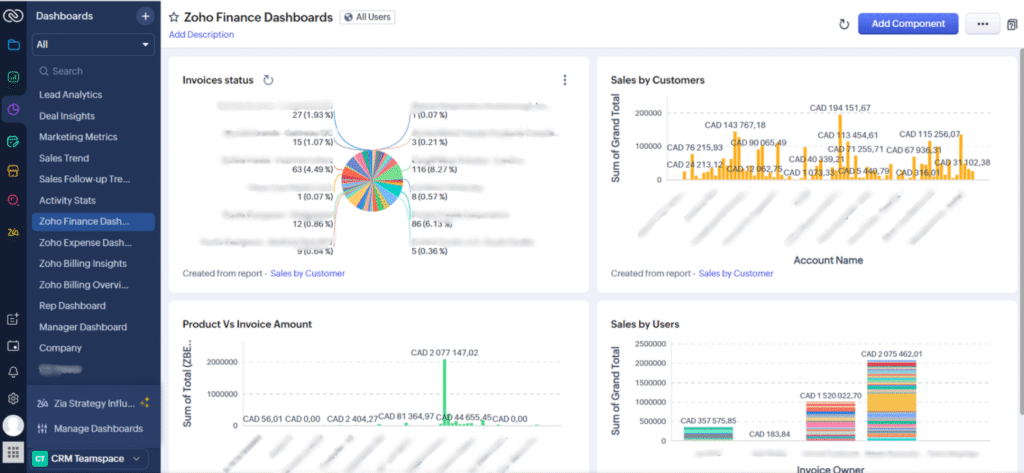
This shift improved execution speed and made forecasting more reliable.
Engagement models for Zoho One implementation
Different businesses require different levels of support depending on their current setup and complexity.
A fixed-cost model works well for defined implementation projects with clear scope. Hourly consulting supports ongoing improvements or advisory needs. Full implementation from scratch is suitable for businesses moving from disconnected systems. Optimization services help improve existing setups where tools are already in use but not structured properly.
Book a free consultation
Businesses planning to implement Zoho One or improve an existing setup can request a system audit or book a consultation.
Himcos focuses on aligning system configuration with actual business workflows to improve execution, visibility, and process clarity.
Final takeaways for growing businesses
- Growth without structured systems creates operational gaps
- Disconnected tools reduce visibility and slow execution
- A unified system connects teams and improves coordination
- Automation reduces manual effort and increases consistency
- Structured implementation determines long-term success